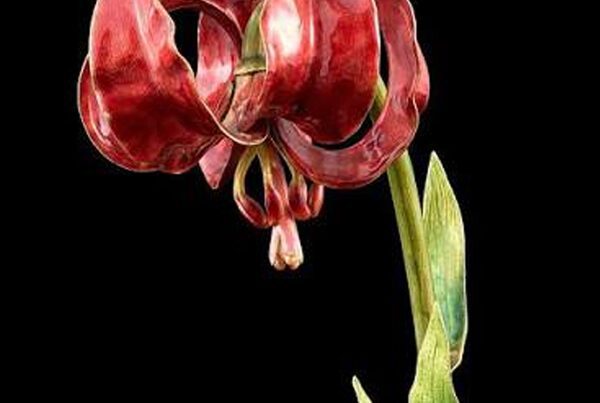
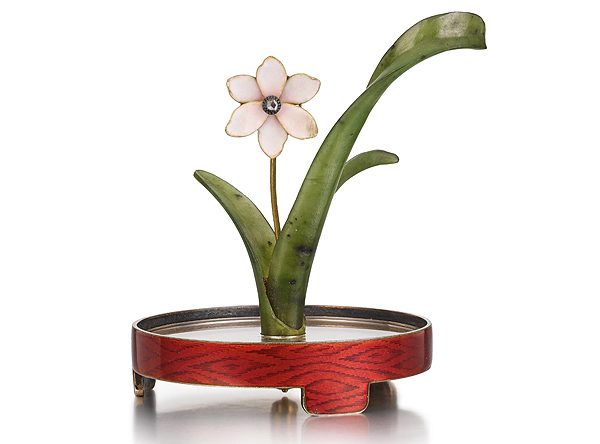
The 128-lot on-line sale of Fabergé, Gold Boxes & Vertu staged by Sotheby’s Geneva April 28-May 15 saw 27 of the 34 Fabergé lots find takers (13 for above high-estimate), yielding a premium-inclusive CHF1.13m. Chief Fabergé failure was a dainty nephrite and enamel Anemone by Henrik Wigström (Lot 1003). One reason it didn’t sell: it was missing one of its leaves, which appeared to have broken off. Fabergé flowers should be pristine! Sale expert Helen Culver-Smith told me the CHF 60,000-70,000 estimate was ‘very reasonable’ – but, as far as I’m concerned, a broken Fabergé flower is like a rose without a thorn or a vine without a grape. In commercial terms, it’s a gonner.
The Anemone’s previous saleroom appearance was at Christie’s London in 2004, when it fetched £47,800. It was once owned by Sir William Seeds (1882-1973), U.K. Ambassador to the Soviet Union in 1939-40 after diplomatic postings to Peking, Athens, Lisbon, Bogotá, Albania and Brazil. In January 1922, as British Consul in Bavaria, he attended a Nazi rally in Munich, finding Hitler a ‘rabid Nationalist and anti-Semite’; ten months later he reported that Hitler had ‘developed into something much more than a scurrilous and rather comic agitator.’
Seeds spent two years in Tsarist Russia as a student (1899-1901) and became a keen admirer of Fabergé. His collection of ten hardstone figures (‘my little men’) – Policeman, Carpenter, Merchant, House Boy, Boyar, Ukrainian, Soldier of Preobrazhenky Regiment, Balalaika Player, Peasant with Shovel & Coachman – was acquired by Wartski after his death. He bequeathed a Fabergé gold and diamond imperial Presentation Box to the V & A.
-

- 2004

-
- 2026
-
- SEEDS’ TEN MEN

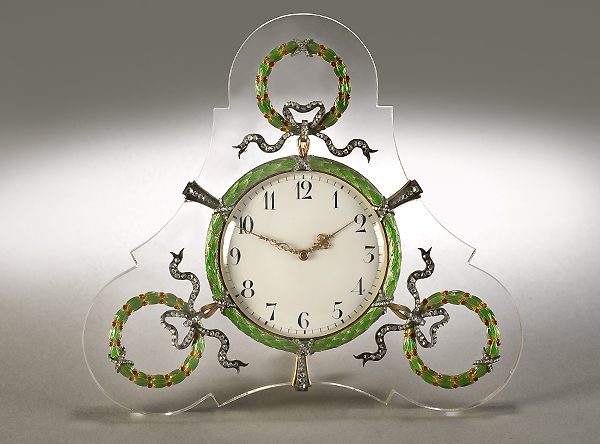
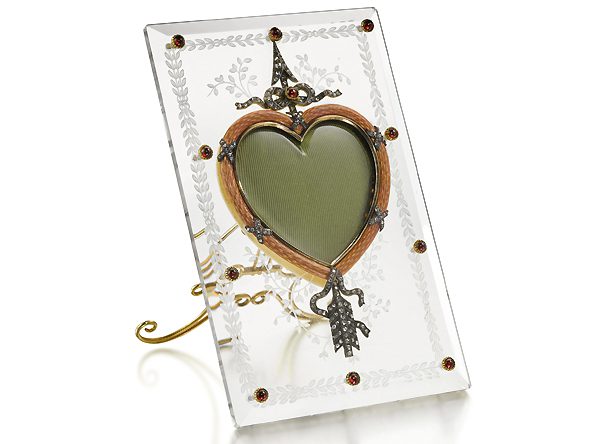
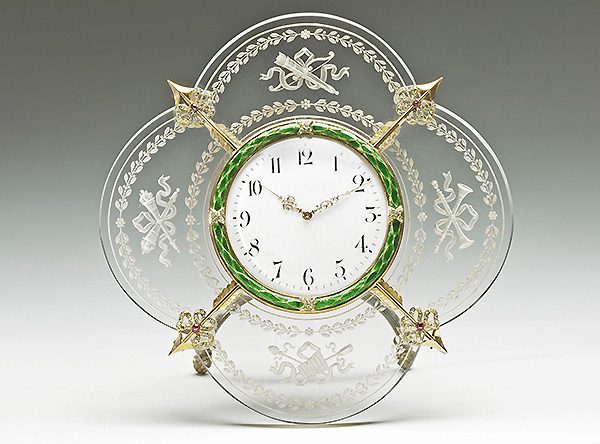
A rock-crystal Frame by Perkhin (1899-1903), with a heart-shaped bezel in translucent pink enamel and its original holly wood case, led the Fabergé offerings with CHF 192,000 (Lot 1008, est. CHF 100,000-150,000). It’s a fantastic thing, and very rare: Fabergé only used panels of carved rock-crystal for a handful of frames and clocks. A lobed desk clock mounted on a panel of rock-crystal (also by Perkhin) is in the Royal Collection; I also own a rock-crystal and enamel clock by Perkhin (formerly in the Forbes Collection) with an unusual trefoil shape. Sotheby’s Frame last appeared at auction in October 2000, when surfaced Christie’s New York sold it for $143,500 (which, allowing for inflation, is worth around CHF215,000 today).
-
- FABERGÉ ROCK CRYSTAL DESK CLOCK, M.PERKHIN (RUZHNIKOV COLLECTION)
-
- FABERGÉ ROCK CRYSTAL FRAME, M.PERKHIN (LOT 1008)
-
- FABERGÉ ROCK CRYSTAL CLOCK, M.PERKHIN (BRITISH ROYAL COLLECTION)
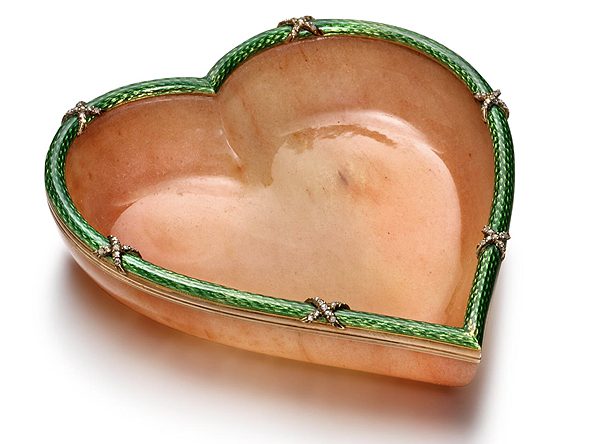
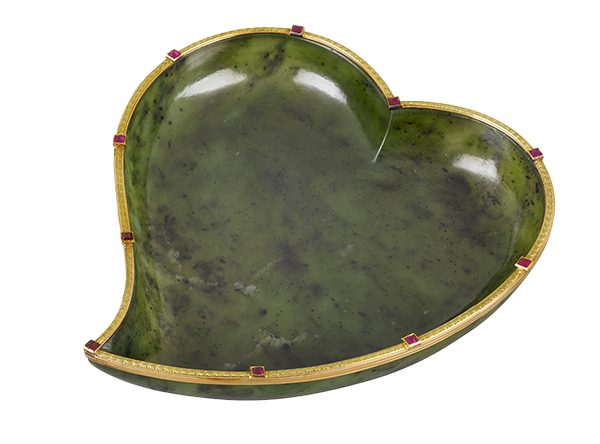
Another Fabergé piece adopting the heart shape was a very interesting Perkhin Bowl (c.1890) made from aventurine quartz with a green enamel rim. This took CHF 64,000 (Lot 1006, est. CHF 30,000-50,000). The choice of emerald green enamel is very, very attractive, and the original fitted holly wood case enhances the value. Fabergé were fond of hearts; I have a nephrite tray by Wigström with a not dissimilar shape.
-
- FABERGÉ JEWELLED GOLD AND ENAMEL-MOUNTED AVENTURINE QUARTZ BOWL, M.PERKHIN (LOT 1006)
-
- FABERGÉ JEWELLED GOLD-MOUNTED NEPHRITE BOWL, H.WIGSTRÖM (RUZHNIKOV COLLECTION)
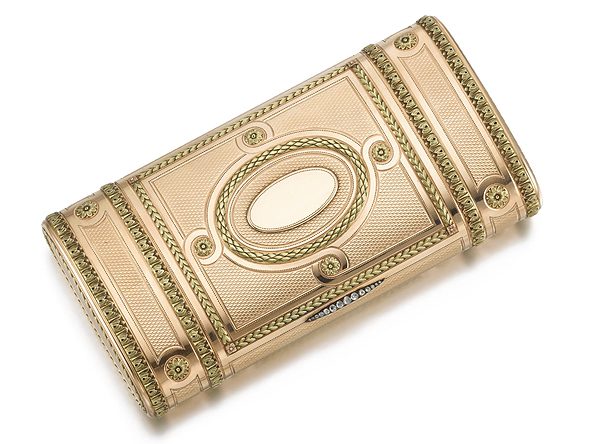
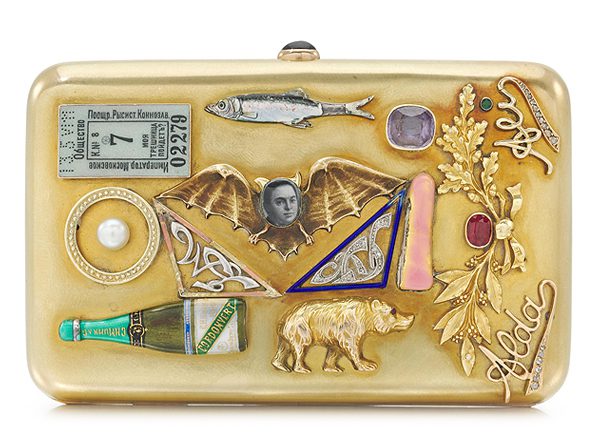
A two-colour gold Cigar Case by Wigström (1904-08) pulled in CHF 64,000 – a decent price for a meticulously crafted piece (Lot 1021, est. CHF 60,000-70,000). But the wacky gold Cigarette Case inscribed Alda and Ali, whimsically cluttered with a plethora of ridiculously placed charms that rendered the item nothing but ugly, only squeaked through on its reserve. Dunno who would buy such a thing. The word ‘taste’ does not apply. It was offloaded for CHF 25,600 (Lot 1017, est. CHF 20,000-30,000).
-
- FABERGÉ GOLD CIGAR CASE, H.WIGSTRÖM (LOT 1021)
-
- FABERGÉ GOLD SIGNATURE CIGARETTE CASE (LOT 1017)
CLOCKS
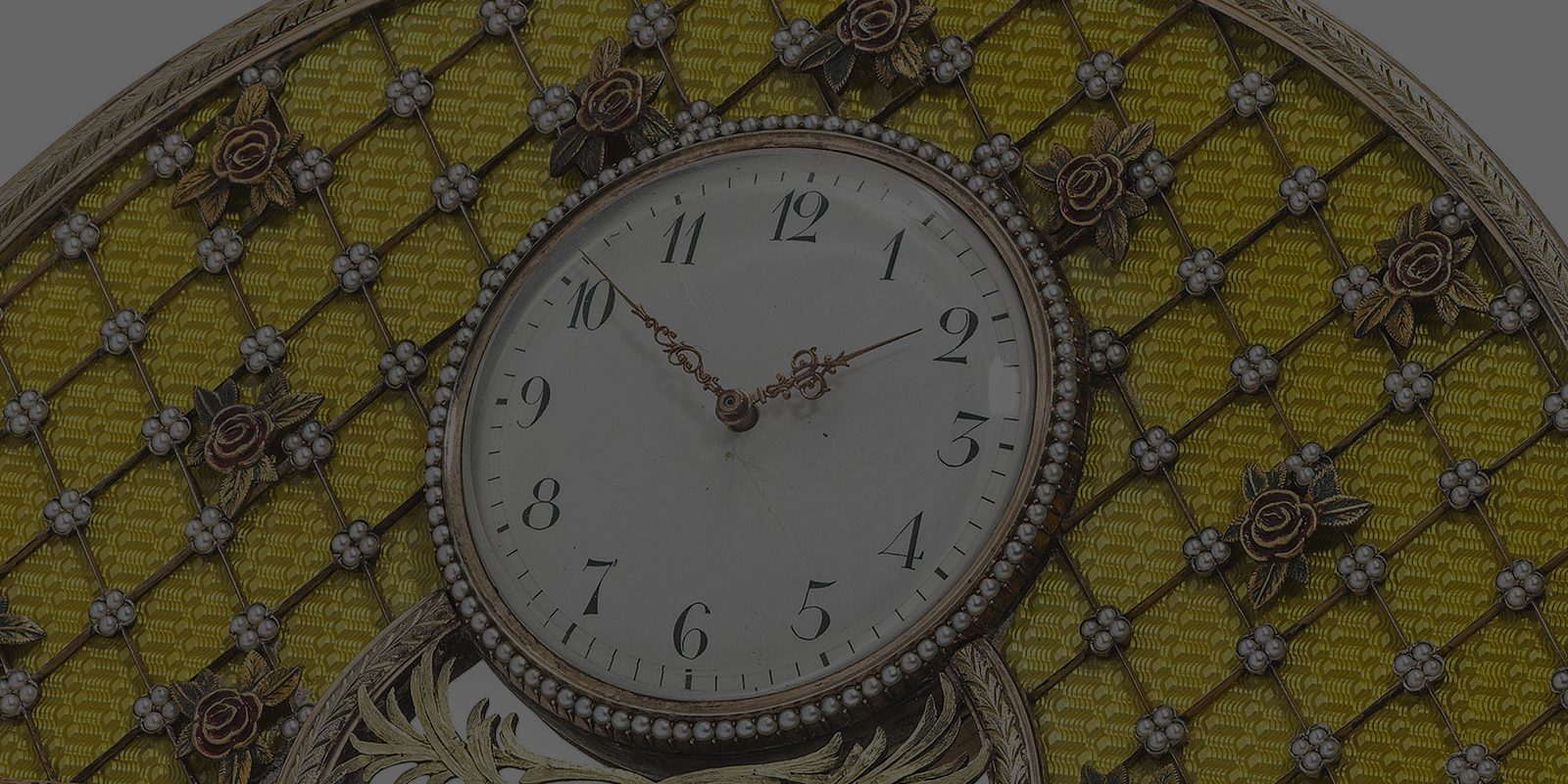
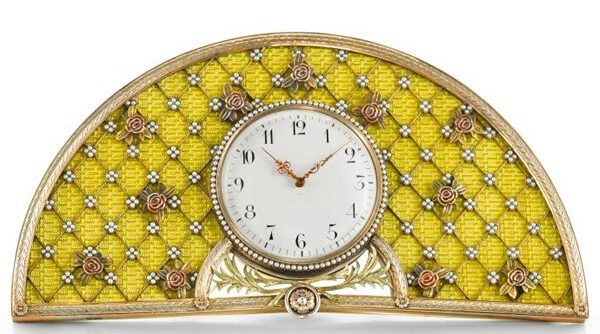
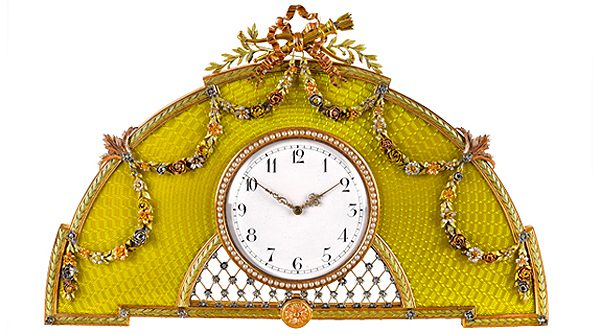
A canary-yellow guilloché enamel Demi-Lune Desk Clock by Mikhail Perkhin (c.1890), 17.6cm wide, made CHF 115,200 (Lot 1014, est. CHF 80,000-120,000). It sold at Christie’s London in 2019 for £118,750 (worth around CHF126,000 today). It would be harsh to suggest it has diminished in value. I was tempted to bid on the clock, but it was targeted (successfully) by a friend of mine. I have similar semi-circular yellow clock from the collection of Mohammed Mahdi Al Tajir (born 1931).
-
- FABERGÉ PEARL-SET SILVER-GILT AND ENAMEL DESK CLOCK, M.PERKHIN (LOT 1014)
-
- FABERGÉ PEARL-SET SILVER-GILT AND ENAMEL DESK CLOCK, M.PERKHIN (RUZHNIKOV COLLECTION)
Al Tajir is a colourful character. He was born in Bahrain but educated, rather less exotically, in Preston. He made his first millions in oil and aluminium, then served as the United Arab Emirates’ first ambassador to the U.K., and attempted to broker a peace deal during the Lebanese Civil War in the 1980s. In 1993 he paid a then-record price for Silver at auction: the equivalent of £2.27 million for the ‘Royal Hanover Chandelier’ (1736) at Christie’s Monaco. Al Tajir’s multifarious holdings include the Park Tower Hotel in Knightsbridge; 18th century Mereworth Castle in Kent (inspired by Palladio’s famous Villa Rotunda in Italy); a private bank in the Cayman Islands; the bottled-water company Highland Spring; and an 18,000-acre estate in Scotland. They say he’s the richest individual north of the border, though I doubt he owns a kilt.
The square silver and guilloché enamel Desk Clock by Wigström (1904-08), 10.3cm tall and once owned by Grand Duchess Xenia, brought CHF 83,200 (Lot 1010, est. CHF 55,000-75,000). I reckon that’s a going price for a fairly simple Fabergé clock. It’s a nice salmon-pink colour and has great provenance and exhibition history – it was shown at Fabergé : Hofjuwelier der Zaren at the Munich Kunsthalle in 1987, and at Carl Fabergé : Goldsmith to the Tsars at Stockholm’s National Museum a decade later.
-
- FABERGÉ DESK CLOCK, H.WIGSTRÖM (LOT 1010)

-
- FABERGÉ DESK CLOCK, H.WIGSTRÖM (LOT 1020)
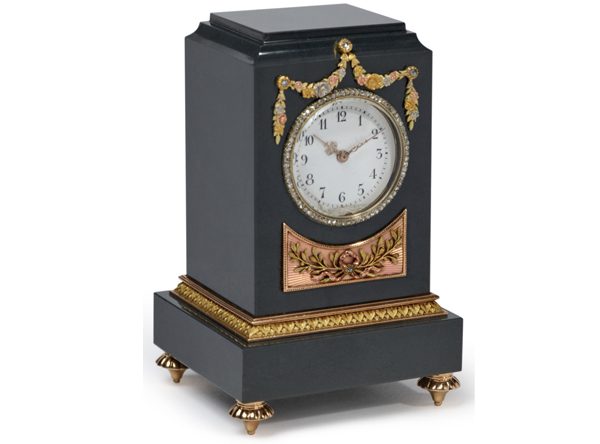
A Kalgan Jasper Desk Clock by Wigström (1904) sold for CHF 51,200 (Lot 1020, est. CHF 30,000-50,000). It’s a nice clock, but the lower dial is badly cracked and chipped, and needs surgical attention (plus there are some issues with the gold garlands up top). I’ve looked at the piece carefully once or twice, but cannot understand how on earth the dial was damaged: it’s ‘protected’ behind glass.
ANIMALS
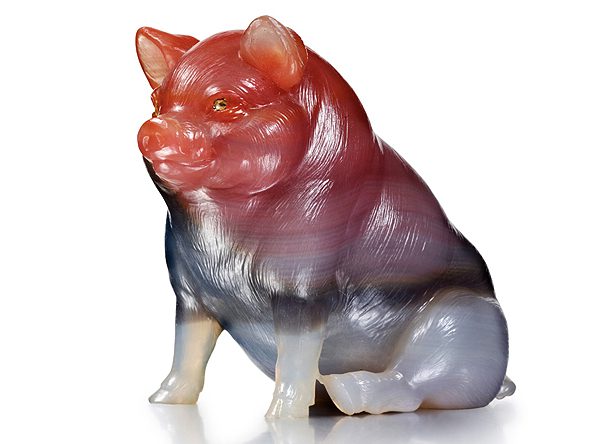
An ‘apparently unmarked’ agate Pig, 5.3cm long with diamond eyes, in its original fitted holly wood case (St Petersburg c.1900), snorted to CHF 128,000 (Lot 1001, est. CHF 40,000-60,000). The agate graduates in attractive belted fashion from grey to deep red. I love the amazing choice of stone: that’s what makes this piece one of the most interesting animals I have seen. The carving is wonderful, but the pig’s appeal is not so much about the carving. If the pig had been made out of bowenite, or some other bland stone, the figure wouldn’t have nearly the same appeal. This sultry sow stands out in a cohort of the most interesting animals Fabergé ever produced.
-
- FABERGÉ MODEL OF A PIG (LOT 1001)
-
- FABERGÉ MODEL OF A SOW (LOT 1002)

-
- FABERGÉ MODEL OF A PIG (KREMLIN MUSEUMS)
-
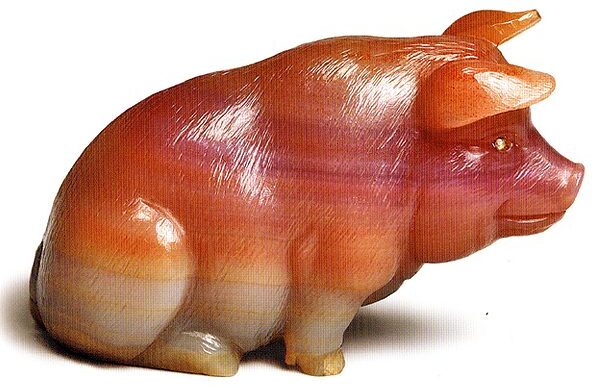
- FABERGÉ MODEL OF A SOW (HERMITAGE MUSEUM)

Talking of bowenite, another Pig (c.1900) carved from the stuff sold around low-estimate for CHF 35,840 (Lot 1002, est. CHF 30,000-50,000). As I mentioned in my Sale Preview, I don’t like bowenite. It looks like soap. And the carving here is nothing to write home about. Fabergé made lots of docile-looking pigs standing around doing nothing. They all look pretty much the same.
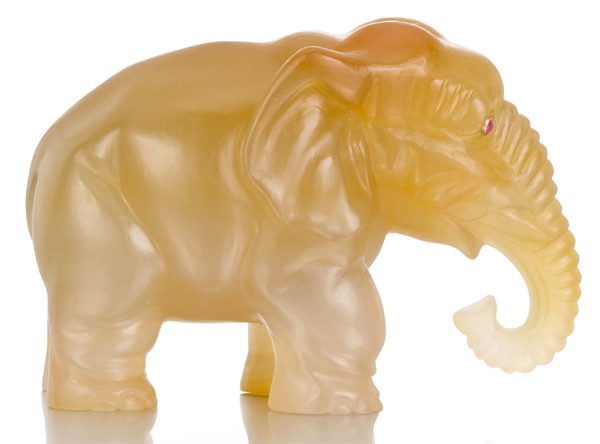
The agate Elephant that fetched CHF 40,960 (equivalent to £38,600) had been offered to me by a Georgian lady for £30,000 a few months ago (Lot 1034, est. CHF 20,000-30,000). It was only ‘attributed to’ Fabergé, and without its original box or documented provenance, so how can anyone be sure – even if it’s very nicely carved? Fabergé, Sumin, someone else…. Go figure. There were several retailers of such pieces.
-
- MODEL OF AN ELEPHANT (LOT 1034)
-
- MODEL OF A RHINOCEROS (LOT 1035)
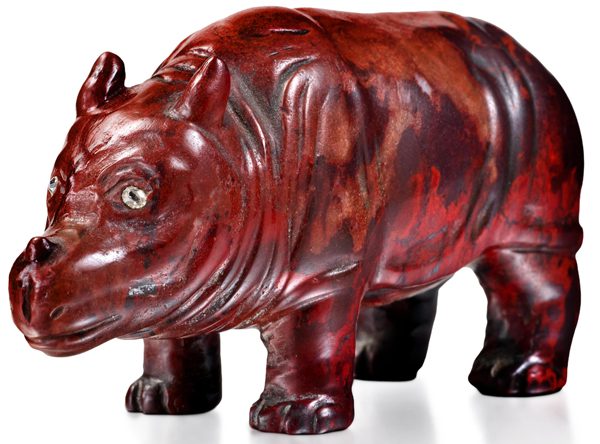
What Sotheby’s described as a Baby Rhinoceros made from patchy dark red jasper culled CHF 19,200 (Lot 1035, est. CHF 12,000-18,000). Who decreed it a ‘baby’ rhinoceros? Is there a Sotheby’s Rhino Expert who assesses the age of African Animals? At 7cm long this is quite large for a Fabergé creature, i.e. the size is anything but babyish. I suspect the ‘baby’ label was designed to detract attention from the poor creature’s lack of horn. I suspect the horn somehow got separated from the rest of the body – I don’t have a firm opinion, though the modest price strengthens my doubts.
Fabergé produced several rhino models; all those I’ve seen have fully grown horns. After all, without a horn, a rhino looks a bit like a hippo: I’m sure Carl Fabergé would have insisted any rhino of his had a fiercely self-respecting horn.
-
- FABERGÉ SILVER MODEL OF A RHINOCEROS (CHRISTIE’S NEW YORK, JUNE 10, 2026)
-
- FABERGÉ MODEL OF A RHINOCEROS (EX-RUZHNIKOV COLLECTION)

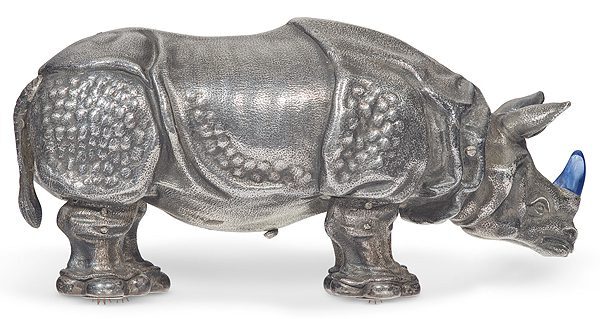
I once owned an obsidian Rhino by Fabergé, horn and all. Another Fabergé Rhino is coming up at Christie’s New York on June 10, again proudly displaying its majestic and distinctive attribute (Lot 264, est. $300,000-500,000). So the question arises: would any collector want to own a model of a camel without a hump, a cat without a tail or a flower without a leaf? ‘Hornless Rhino’ sounds like a misnomer. I like My Rhinos to be Horny!
-
- FABERGÉ SILVER CHIMPANZEE TABLE-LIGHTER, J.RAPPAPORT (LOT 1036)
-
- FABERGÉ SILVER CHIMPANZEE TABLE-LIGHTER, J.RAPPAPORT (RUZHNIKOV COLLECTION)
-
- FABERGÉ SILVER CHIMPANZEE TABLE-LIGHTER, J.RAPPAPORT (HUBEL COLLECTION)

-
- FABERGÉ SILVER CHIMPANZEE TABLE-LIGHTER, J.RAPPAPORT (KREMLIN MUSEUMS)
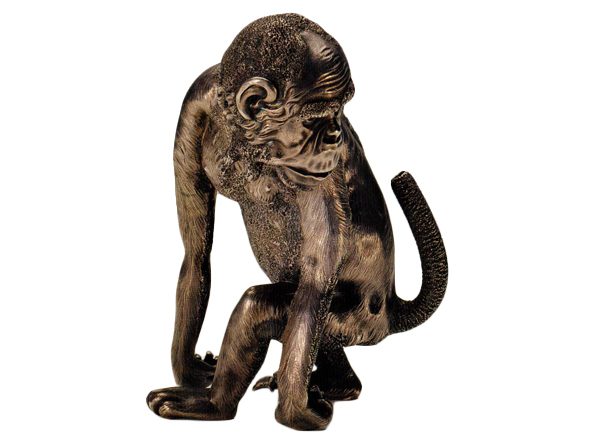
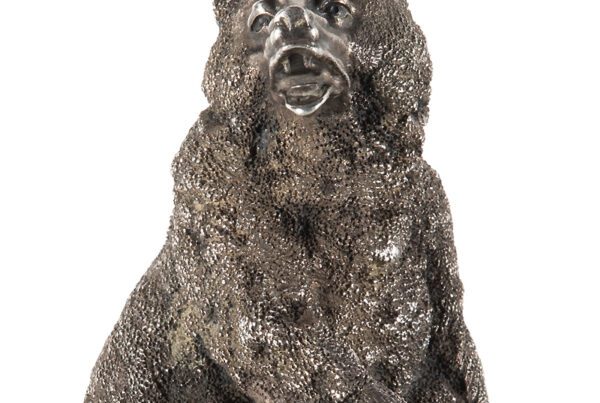
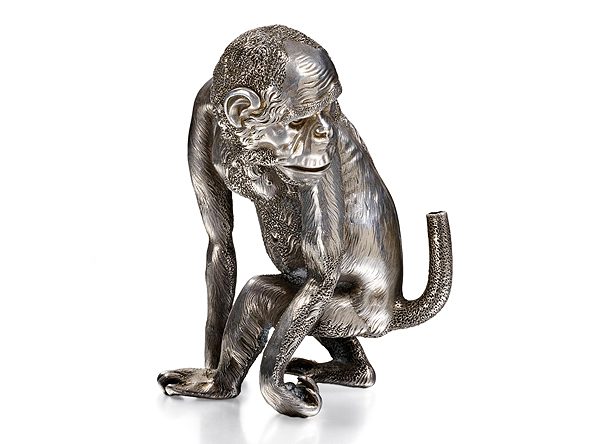
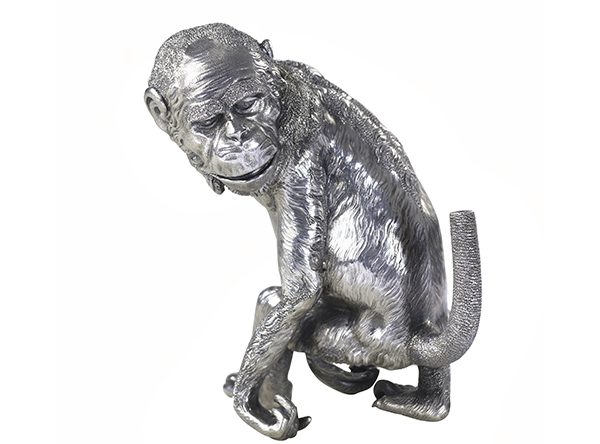
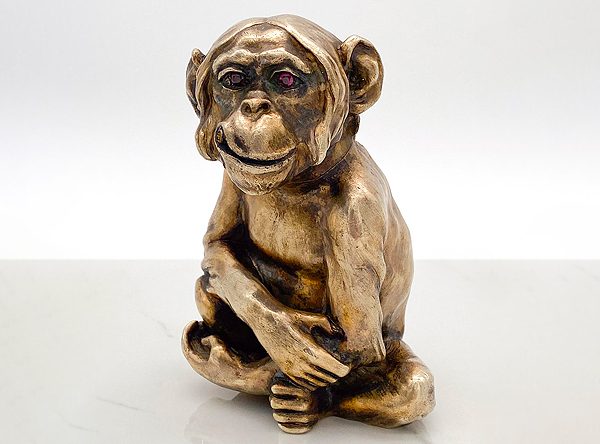
Finally, a mention for the silver Chimpanzee table-lighter (1899-1903) by Julius Rappoport that took CHF 35,840: a wonderful model of a Fabergé monkey (Lot 1036, est. CHF 30,000-50,000). We’re used to the idea that Fabergé animals were unique – one of a kind, so to speak – but that’s not the case here. I have a monkey-lighter just like this one, bought at Drouot for €19,000 hammer around three years ago; a Moscow dealer friend has another (purchased at Sotheby’s in the 1990s); the Moscow Kremlin Collection has the same model; and so do A La Vieille Russie (who are touting it for $150,000). So: six monkeys of identical design… and I’m sure more were produced. Just how many we don’t unfortunately know. I don’t question the authenticity of any of them. But they do underline that Fabergé produced series of silver animals.
-
- FABERGÉ SILVER CHIMPANZEE TABLE-LIGHTER, J.RAPPAPORT (PRIVATE COLLECTION)

-
- FABERGÉ SILVER CHIMPANZEE TABLE-LIGHTER, J.RAPPAPORT (RUZHNIKOV COLLECTION)
-
- FABERGÉ SILVER CHIMPANZEE TABLE-LIGHTER, J.RAPPAPORT (YAKOBASHVILI COLLECTION)
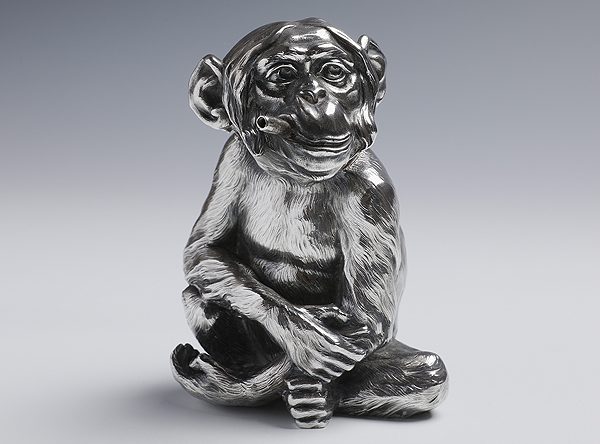
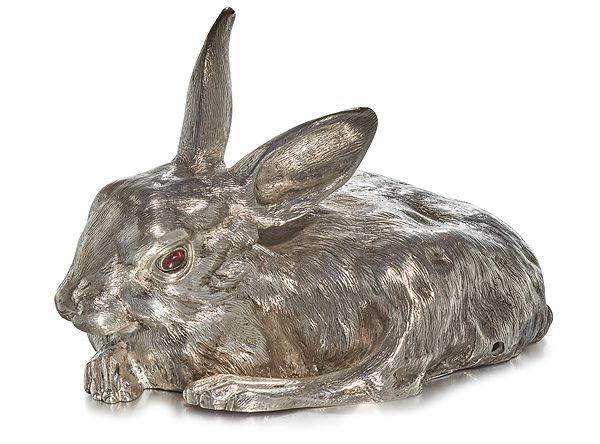
There’s an identical Smoking Monkey in both my collection and that of a Berlin dealer; another is owned by David Yakobashvili in Monaco. Identical silver Rabbits or Hares also appear on the market, albeit rarely. The exhibition Fabergé: Imperial Craftsman and His World, held in Wilmington (Delaware) in 2000/1, featured no fewer than seven long-eared creatures in different silvery poses (all later acquired by the carrot-chomping Professor Ivanov). I bought a Rabbit (152) identical to one of those seven at Sotheby’s New York recently. Another rabbit identical (153) to a different member of the Magnificent Seven was offered to me by a London dealer.
-
- FABERGÉ SILVER RABBIT (RUZHNIKOV COLLECTION)
-
- FABERGÉ SILVER RABBIT (PRIVATE COLLECTION)

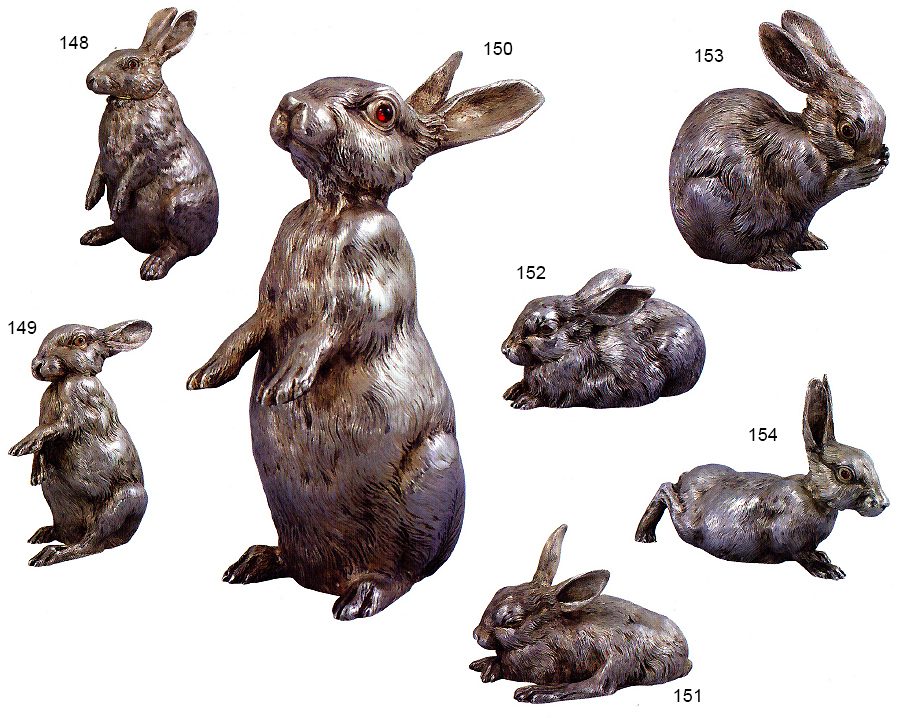 FABERGÉ SILVER RABBITS (WILMINGTON FABERGÉ EXHIBITION CATALOGUE)
I don’t remember seeing two identical Fabergé cigarette-cases or two identical frames. True, the firm’s Moscow branch produced lots of identical flatware sets – spoons, forks and so on – but that’s understandable. As far as Fabergé’s whimsical hardstone items are concerned, I can’t remember any of them being repeated (other, perhaps, than docile pigs). Silver figures were different. I have a silver Fabergé Boar (or Sow) sitting on its ass. A La Vieille Russie have an identical model.
 FABERGÉ ICON OF CHRIST PANTOCRATOR, H.ARMFELT
If a client wanted a series rather than just a unique item, Fabergé wouldn’t say no: he was a businessman first and foremost. Take the circular Icon of Christ Pantocrator in a giltwood frame shaped like a Star of David, incorporating six ruby cabochons, made by Workmaster Hjamar Armfelt. This was exhibited at the Fabergé In America show in New York in 1996 – lent (at my suggestion) by owner Elizabeth S. Blake. Géza von Habsburg’s exhibition catalogue relates how the icon was commissioned from Fabergé by Princess Alexandra Trubetskaya née Obolenskaya (1861-1939) to mark the birth of her goddaughter Countess Alexandra Lambsdorff-Galagan on 17 February 1913. The order came with strings attached: Fabergé had to provide a further six identical icons (minus rubies) for the Princess’s six other grandchildren.
Liz Blake got this cute story (and her cute icon) from the Countess in person. In her younger days the Countess – who died in the States in 2001 – was pretty cute herself, as this Savely Sorin portrait reveals.
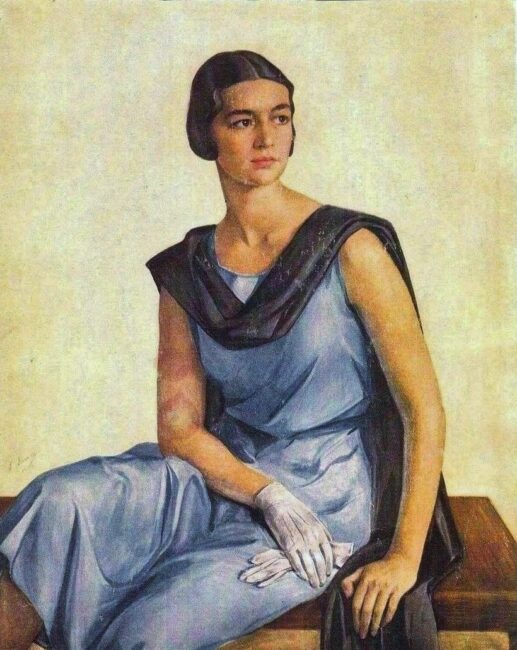 COUNTESS ALEXANDRA LAMBSDORFF-GALAGAN, S.SORIN
Sorin (a pupil of Repin) moved to Paris in 1920 then settled in the USA in 1939. His illustrious sitters included Maxim Gorky (Fine Arts Museum of San Francisco), Anna Pavlova (Musée du Luxembourg, Paris) and the future Elizabeth II (Clarence House).