
Heritage Auctions’ 201-lot sale of a Geneva Fabergé Collection on May 20 yielded a premium-inclusive $2.46 million.
The run-up to the sale was rocked by the withdrawal of the item adorning the catalogue cover: a nephrite and gold Rowan Tree Sprig ascribed to Wigström, with a spray of red jasper berries in a tapering rock crystal vase (Lot 42047). This was to have been offered for upwards of $240,000, but failed to come under starter’s orders amidst authenticity concerns. Heritage’s Russian chief Nick Nicholson was keen to point out that the Sprig was shown at the New Orleans Museum of Art in 2008/9 (Fabergé from the Hodges Family Collection) and published in the accompanying catalogue (which contained essays by highly esteemed Fabergé experts Géza von Habsburg & Wartski’s Kieran McCarthy). It had, he added, been in the consignor’s collection ‘for decades.’
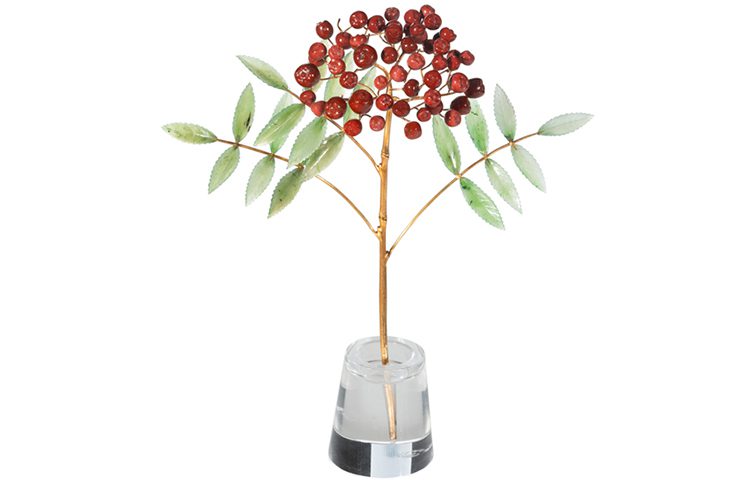 FABERGÉ ROWAN TREE SPRIG, H.WIGSTRÖM (LOT 42047)
Nick did, however, acknowledge that ‘scholarship on Fabergé has advanced considerably over that past thirty years, and concerns raised by several European colleagues during the London preview warranted careful consideration and further scrutiny.’ So the flower study was withdrawn from sale ‘pending further research.’
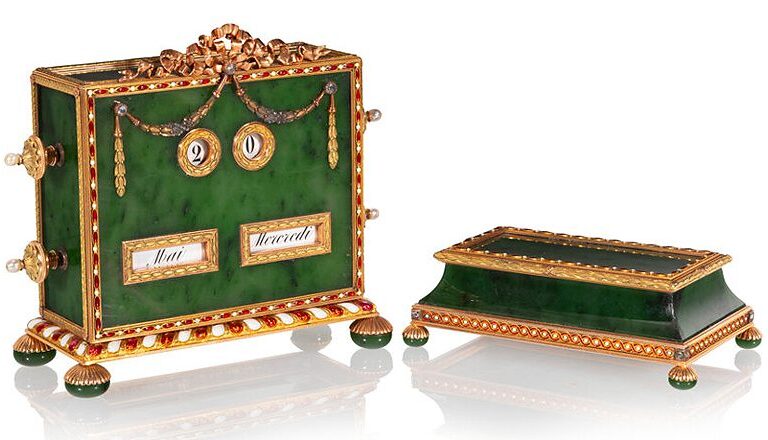
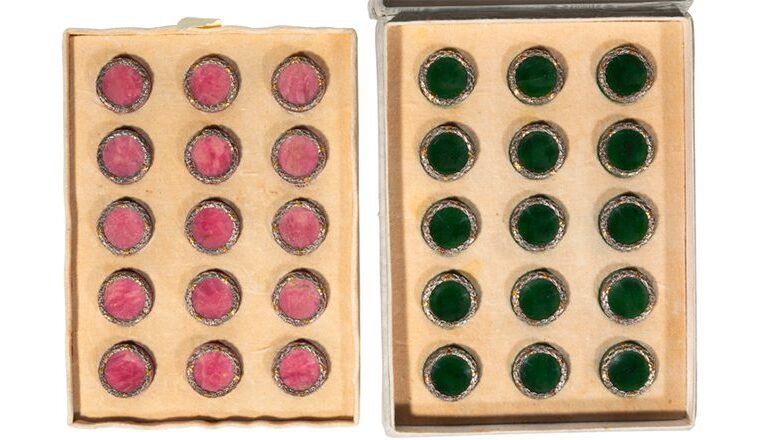
Its absence left just three lots with a starting-price in excess of $50,000, two of which failed to sell. First of these was an exquisitely crafted nephrite Perpetual Calendar & Stamp Box by Perkhin (c.1895), whose $400,000 start-price struck me as singularly ambitious… although, having said that, go find another one! (Lot 40085) I certainly wouldn’t be able to steer a potential collector in the right direction. Then there was an ‘apparently unmarked’ nephrite and rhodonite Backgammon Set from c.1890 (Lot 42045, starting-price $80,000). This could embellish any museum collection conscientiously exploring the diversity of Fabergé’s œuvre, sold or unsold. I bet the quest for another set like this would yield nothing, dosh notwithstanding.
-

- FABERGÉ CALENDAR & STAMP BOX, M.PERKHIN (LOT 40085)
-
- FABERGÉ BACKGAMMON SET (LOT 42045)
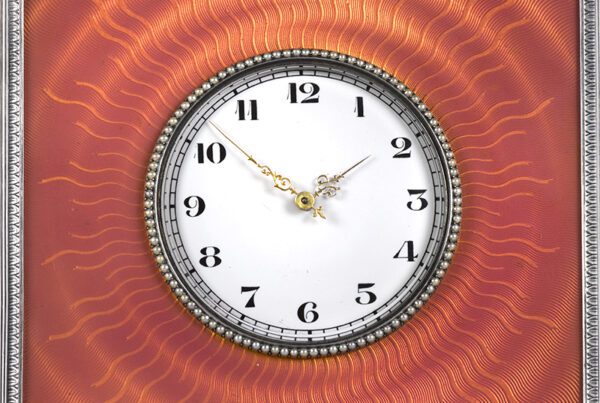
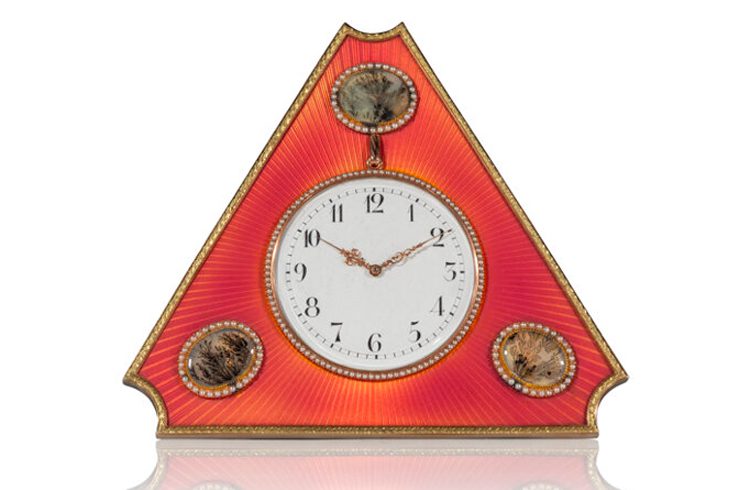
That left as the afternoon’s biggest seller a diamond and pearl-set translucent pink guilloché enamel Table Clock by Mikhail Perkhin (c.1900). Although it was once owned by Dowager Empress Maria Feodorovna, and retained its original presentation case, the clock was hardly a runaway success – selling for $200,000 hammer, and only achieving its $250,000 starting-price once buyer’s premium was added (Lot 42005). When I first saw the estimate I was dubious as to whether the piece would sell at all. In a way I was right: only one rumbustious punter joined the fray. That hardly paints a picture of success – only competition does!
-
- FABERGÉ DESK CLOCK, M. PERKHIN (LOT 42005)
-
- FABERGÉ DESK CLOCK, H.WIGSTRÖM (SOTHEBY’S, MAY, 2026)
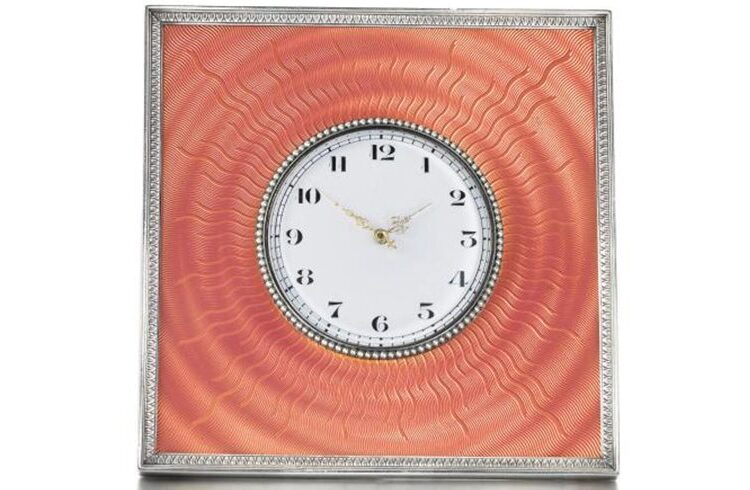
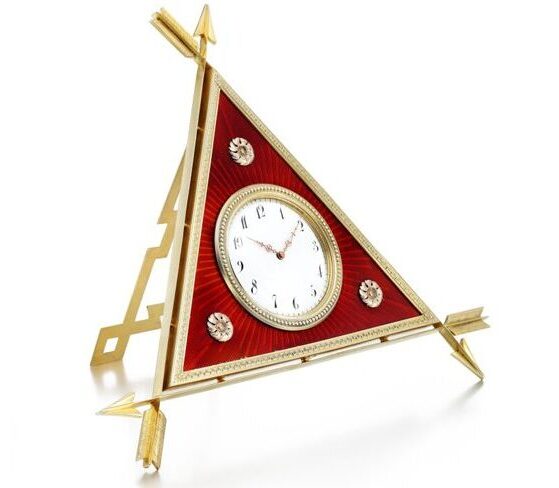
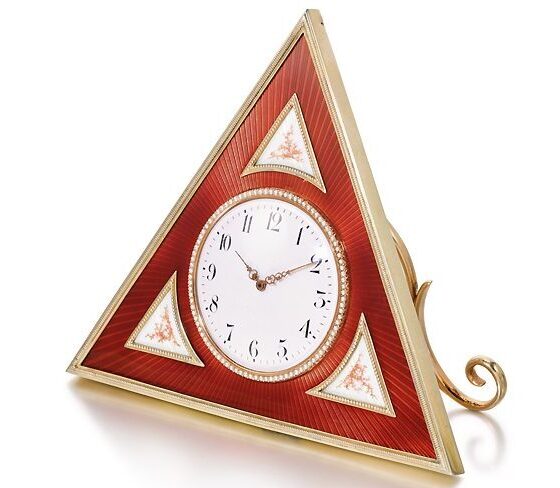
Even so, $250,000 strikes me as a more than healthy price, especially given the recent sale of an imperial pink square clock by Wigström at Sotheby’s Geneva for a premium-inclusive CHF83,200 ($105,800). In 2025 two similar triangular clocks by Perkhin came up at Sotheby’s London and failed to sell at all – one in a sale spanning June 27–July 11 (Lot 17, est. £50,000-70,000), the other on November 25 (Lot 125, est. £150,000-250,000). Both were nice-looking clocks, and I found the huge discrepancy in their estimates hard to understand. The Heritage price of $250,000 shows the market is very much alive, with collectors eager and willing to shell out big bucks.
-
- FABERGÉ DESK CLOCK, M.PERKHIN (SOTHEBY’S, JULY, 2023)
-
- FABERGÉ DESK CLOCK, M.PERKHIN (SOTHEBY’S, NOV, 2025)
-
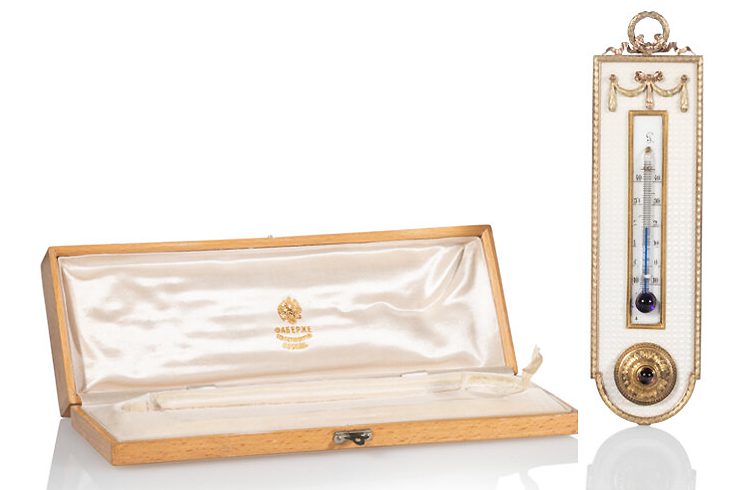
- FABERGÉ THERMOMETER AND BELL PUSH, V.AARNE (LOT 42022)
-
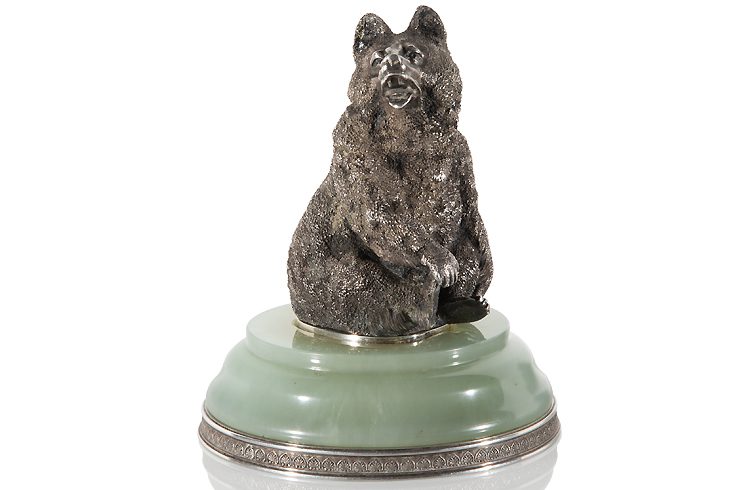
- FABERGÉ SEATED BEAR BELL PUSH (LOT 42054)
Four other items realized $50,000 or over, led by a white guilloché enamel Thermometer cum Bell-Push (c.1900) by Victor Aarne, first owned by Grand Duke Friedrich of Baden, for $68,750 (Lot 42022). The combination of thermometer and bell-push is mighty rare. I do not remember ever seeing another item like this – in books, catalogues or on the market. Just imagine how useful such a piece would have been in the good old days: the ageing Grand Duke (Friedrich was 74 in 1900) sitting in front of a fading fire, sipping vintage schnapps in the middle of miserable German winter, mournfully contemplating the falling temperature on his ducal thermometer, then reluctantly pressing a thermometer button to summon a butler with a life-saving blanket.
These old-time dukes must have been connoisseurs of things rare and unusual. Their regal Russian relatives no doubt contributed to their love of Fabergé.
-
- GRAND DUKE OF BADEN FREDERICK I

-
- STIRRUP CUP
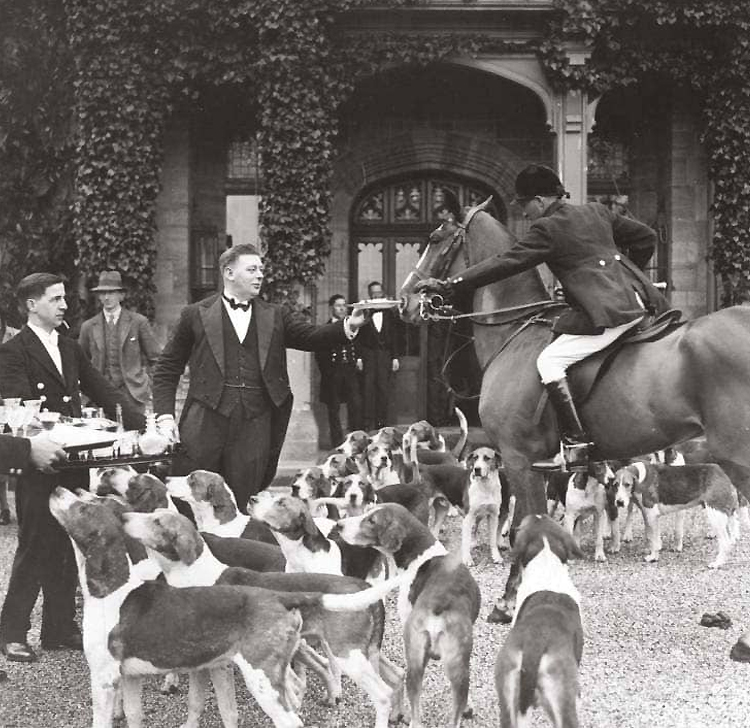
Another dual-purpose piece, in the form of a silver Seated Bear (Moscow 1896), claimed $50,000 (Lot 42054). I’ve never seen such a thing! And boy have I seen a lot – probably everything that needs to be seen! If you pick it up from its circular bowenite base, then turn it upside-down, it’s a Stirrup Cup – traditionally used to serve riders punch before a fox-hunt (essential to ensure a successful killing-spree). Put it back on its base, then press the bear downwards, and it becomes a Bell-Push: just the job for summoning more lashings of performance-enhancing punch.
-
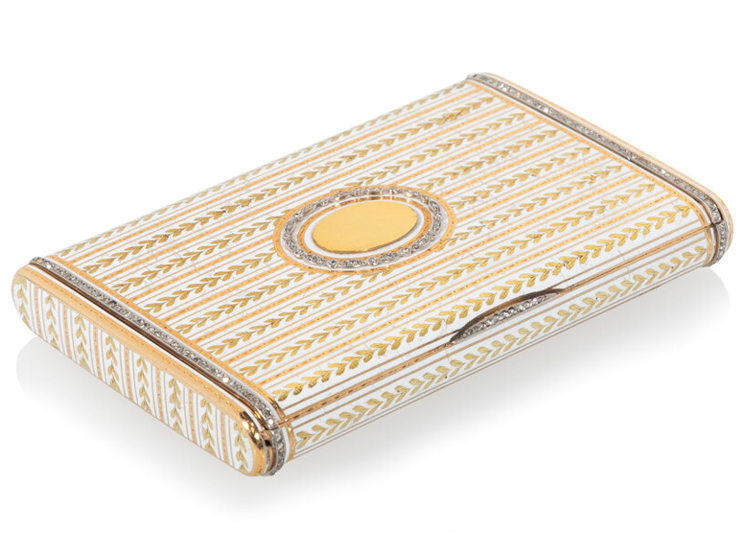
- FABERGÉ GOLD MINAUDIÈRE, H.WIGSTRÖM (LOT 42113)
-
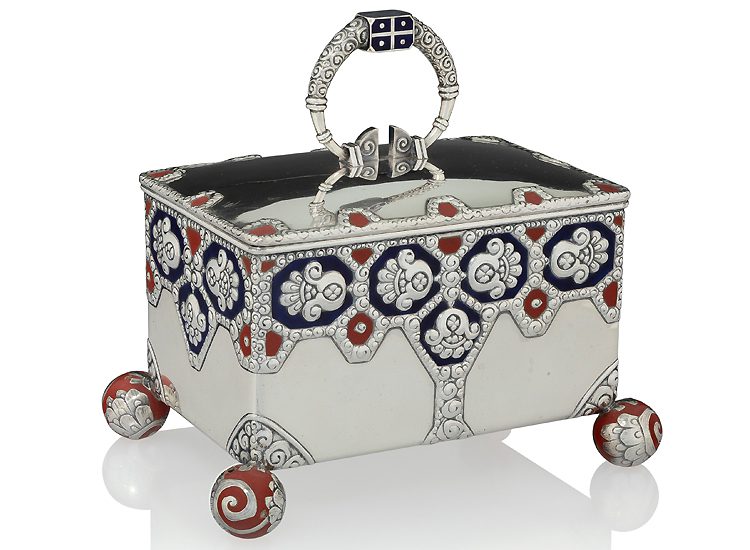
- FABERGÉ SILVER ‘OLD RUSSIAN’ CASKET (LOT 42037)
-
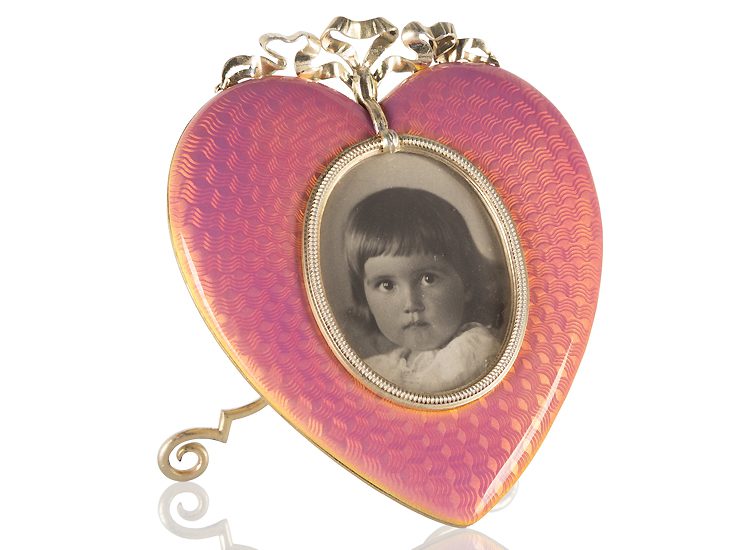
- FABERGÉ SILVER-GILT FRAME (HERITAGE AUCTIONS, DEC, 2025)
-
- FABERGÉ SILVER-GILT FRAME (LOT 42077)
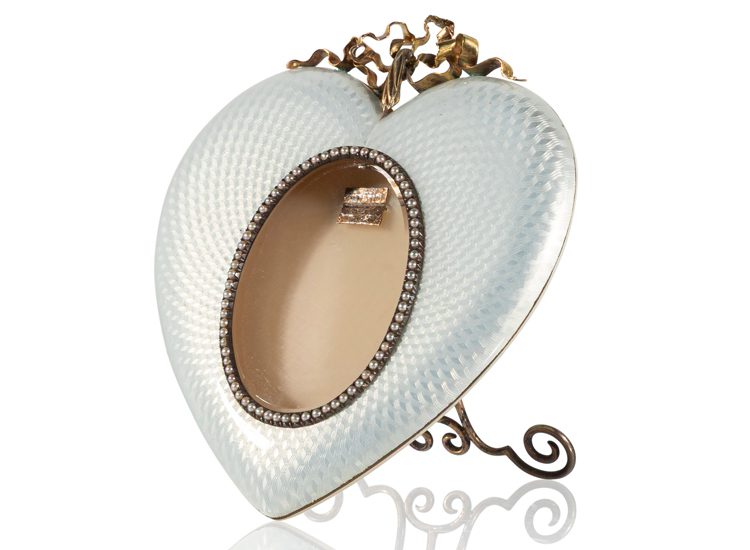
An enamelled silver casket in ‘Old Russian’ style (Moscow 1908-17), acquired by the Serbian royal family during the reign of King Petar I (1903-18), made $65,625 (Lot 42037, starting price $48,000). A striped gold and white champlevé enamel Wigström Minaudière (vanity case), fronted by a diamond-framed oval medallion, took $50,000 (Lot 42113) and a heart-shaped silver-gilt and white guilloché enamel Frame (c.1900), which once embellished the world-famous Ruzhnikov Collection (just kidding), made $45,000 (Lot 42077, starting-price $32,000). Heritage had sold another Fabergé heart-shaped frame, in pink enamel, for $68,750 last December.
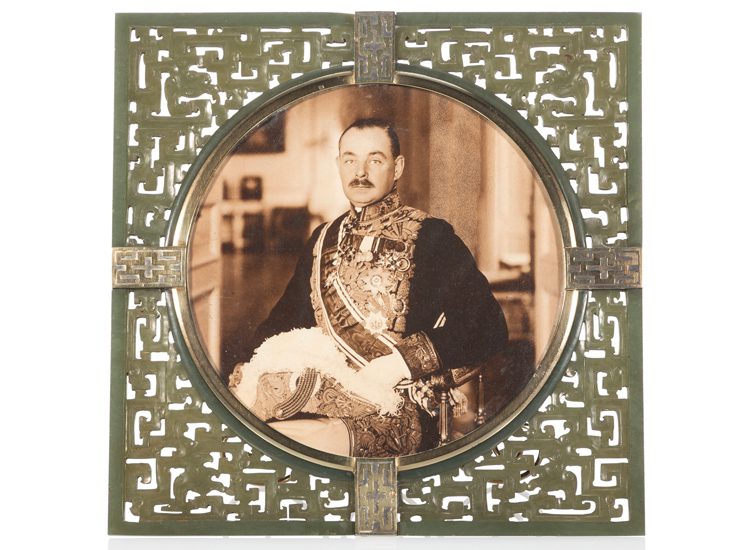 FABERGÉ QING DYNASTY FRAME, H. WIGSTRÖM (LOT 42076)
A silver-mounted reticulated jade Photo Frame performed well to attract $32,500 (Lot 42076, starting-price $8,000). This is essentially a Chinese object that Henrik Wigström twiddled around with, incorporating a rather plain circular silver frame into an openwork plaque of jade. I know Fabergé occasionally added silver mounts to Daum or Gallé glassware, Royal Doulton ceramics, or the handiwork of other West European makers – but to call this jade frame ‘Fabergé’ is (bell) pushing it somewhat!