
Heritage Auctions of Dallas are becoming a very serious outfit when it comes to Russian Art. Numbers-wise they now excel Sotheby’s and Christie’s.
Their next offering takes the form of a 201-lot ‘Gentleman’s Collection’ of Fabergé on May 20, with fifty of the best pieces to be shown in London in mid-May at the Heritage offices just off Hanover Square.
Nick Nicholson has done a great job as Heritage’s Head of Russian Art – but the letter he sent out ahead of the sale left me baffled. Annotated excerpts:
* No auction house has brought this large a group of Fabergé to market at once since 1980. Sotheby’s tried with the Forbes Collection in 2004, but that sale was famously pre-empted.
– I do not remember whether the first assertion is true or not, but Sotheby’s didn’t just ‘try’ – they managed to sell the entire Forbes Collection… and for a stellar sum in excess of one hundred million dollars, never matched since (I was instrumental in negotiating the deal, so I know)! The Heritage collection is expected to bring around $2.5 million – forty times less! The two collections may be broadly similar as far as numbers are concerned, but in terms of substance and quality there’s no comparison. There were nine Imperial Eggs in the Forbes Collection for a start – and seven non-Imperial Eggs!
* We felt that estimates would only distract and discourage buyers, when there are so many works here are affordable.
– I don’t understand that statement! Why should estimates discourage buyers? Every auction in the world uses estimates, including Heritage!
* If you look back at the great Geneva Fabergé sales of the 1970s and ’80s, there were no estimates then, either.
– I’m not sure that’s correct. I was around in the 1970s and ’80s and I remember some catalogues with published estimates, although estimates were often published on a separate sheet of paper.
* This auction will be conducted by Heritage Auctions in Dallas; however, at the time of sale, all lots will be located and sold in situ in Geneva, where title will pass to the winning bidder.
– Why not conduct the sale in Geneva, then, like Christie’s and Sotheby’s did at the Richemond or Beau-Rivage in the past?
* Heritage will invoice and collect the hammer price and buyer’s premium in the United States, but no property will be held or released from the U.S.
– I can’t remember a sale being organized in such convoluted fashion. Sounds weird – a real legal/fiscal farago!
* While the sale takes place in Dallas, it will be, in effect, as if the buyer had bought in Switzerland.
– What on earth does that mean? This is the craziest approach I’ve ever come across!
*
Be all this as it mind-bogglingly may, I hope the sale goes well. I know the Swiss-based vendor, who’s a friend of mine. I’m well aware of the collection. It’s good stuff – all nice, clean, well-kept, authentic. There are few rarities, but no questionable items that I can see.
Nearly half the lots (98) have a starting-price of under $5,000, with a further 57 in the $5-10,000 category and 25 lots starting at $10-20,000. Pretty small beer, in other words. At a Sotheby’s or Christie’s sale you’d be pushed to find a Fabergé piece with an estimate of under $20,000.
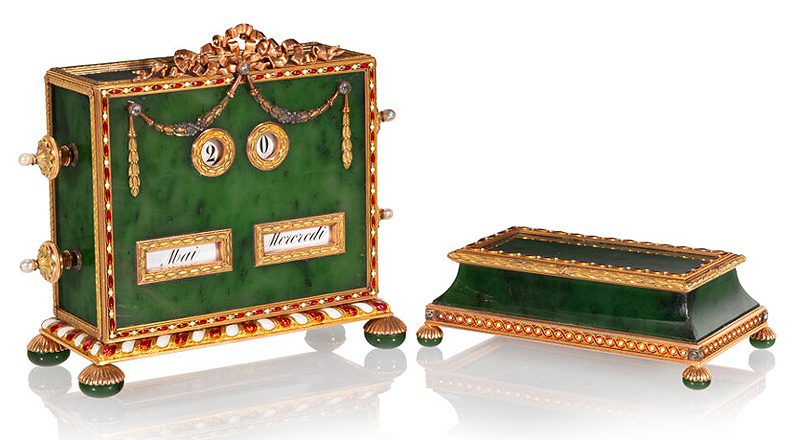 FABERGÉ PERPETUAL CALENDAR & STAMP BOX, M. PERKHIN (Lot 40085)
Only four lots have a starting-price in excess of $50,000… led by a gem-set, gold-mounted nephrite Perpetual Calendar & Stamp Box by Perkhin (c.1895). This is an unusual, interesting and beautifully crafted ensemble, but the $400,000 starting-price strikes me as mighty ambitious (Lot 40085).
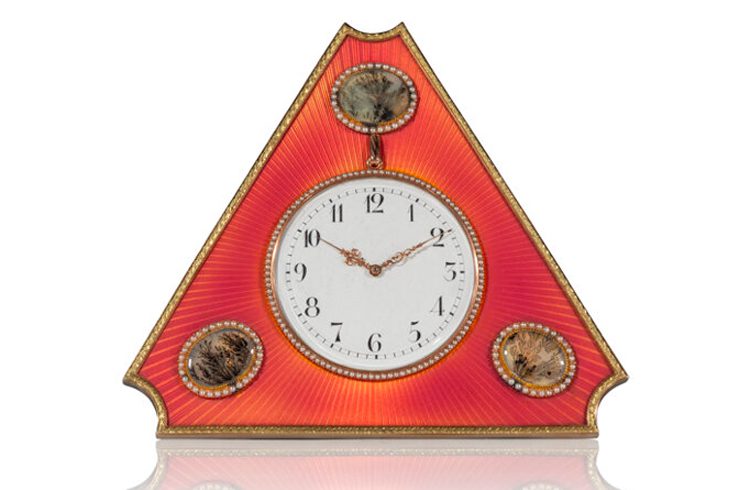 FABERGÉ ENAMEL TABLE CLOCK, M. PERKHIN (LOT 42005)
A diamond- and pearl-set translucent pink guilloché enamel Table Clock with its original presentation case (Perkhin, c.1900) is also aggressively priced, starting at $250,000. That said, it’s one of the sale’s few items with an imperial provenance – acquired by Dowager Empress Maria Feodorovna for 375 rubles on 8 August 1900 (Lot 42005).
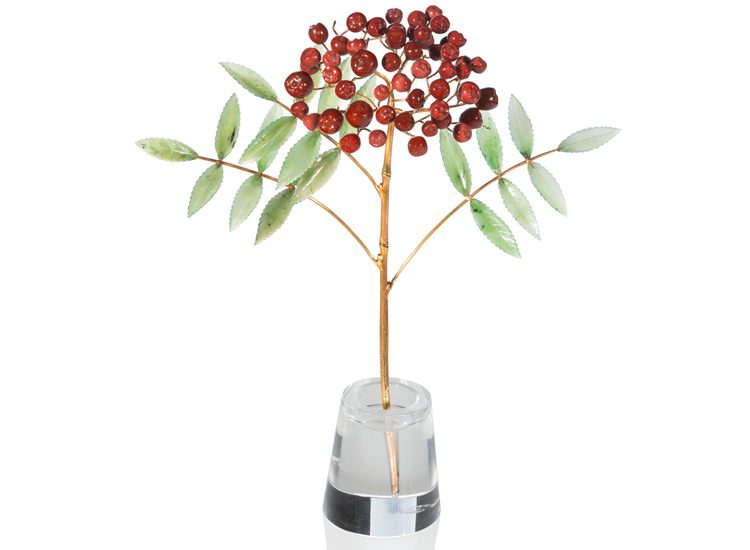 FABERGÉ ROWAN TREE SPRIG, H. WIGSTRÖM (LOT 42047)
I like the look of a nephrite and gold Rowan Tree Sprig by Wigström (1908-17), with its spray of red jasper berries in a tapering rock crystal vase, 20cm tall; a similar rowan tree sprig is in the Royal Collection (Lot 42047, starting-price $240,000).
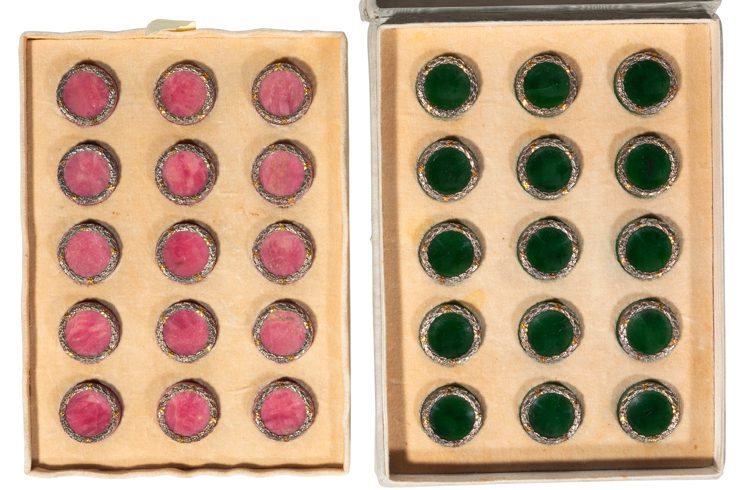 FABERGÉ BACKGAMMON SET (LOT 42045)
The final big-ticket number is a gold- and silver-mounted Backgammon Set set with nephrite and rhodonite pieces (c.1890), ‘apparently unmarked’ but with its original presentation case (Lot 42045, starting-price $80,000). Why say ‘apparently unmarked’ when it is clearly unmarked?
-

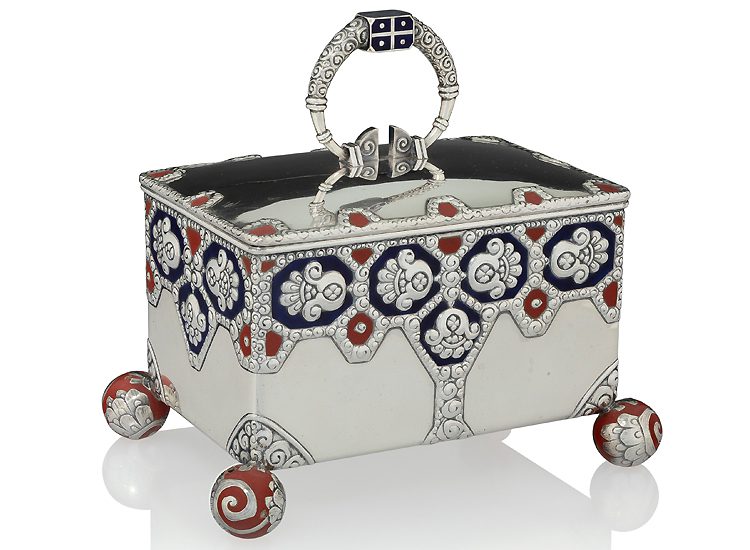
- FABERGÉ SILVER ‘OLD RUSSIAN’ CASKET (LOT 42037)
-
- FABERGÉ PINK GUILLOCHÉ ENAMELLED BONBONNIÈRE, M. PERKHIN (Lot 42059)
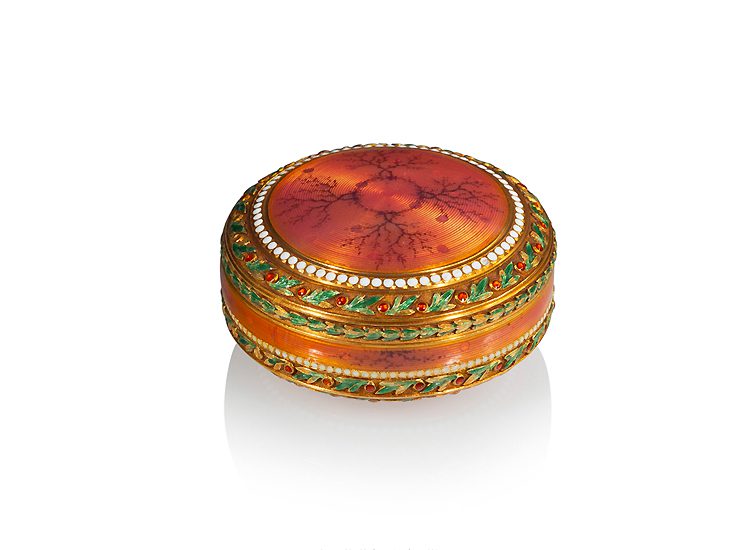
A handful of other items catch the eye, starting with an enamelled silver ‘Old Russian’ casket (Moscow 1908-17) acquired by the Serbian royal family during the reign of Petar I (1903-18). It’s an appealing work. I like the style and the shape (Lot 42037, starting price $48,000). Then there’s a pink guilloché and en camaïeu enamelled Louis XV-style Bonbonnière by Perkhin (1899-1903) – a cute little thing (Lot 42059, starting-price $32,000).
-
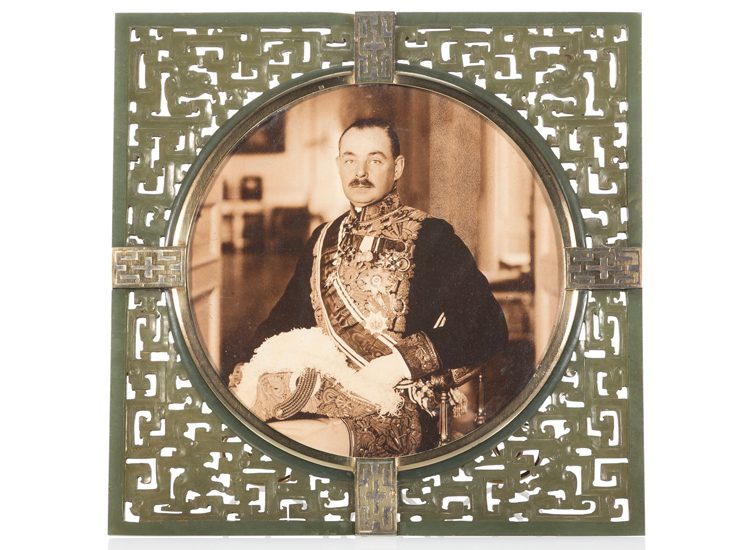
- FABERGÉ QING DYNASTY FRAME, H. WIGSTRÖM (LOT 42076)
-
- FABERGÉ SILVER-GILT FRAME (LOT 42077)
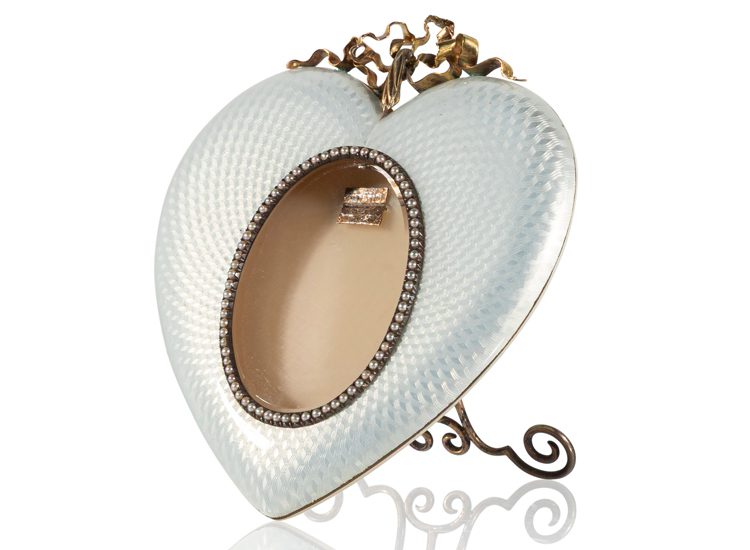
The sale has a couple of nice frames: a silver-mounted reticulated jade Qing Dynasty Frame by Wigström (Lot 42076, starting-price $8,000); and a heart-shaped silver-gilt and white guilloché enamelled Frame (c.1900) that I once owned myself (Lot 42077, starting-price $32,000). It was exhibited at the Fabergé/Cartier show in Munich in 2003. Heritage sold another heart-shaped Fabergé frame, in pink enamel, for $68,750 last December.
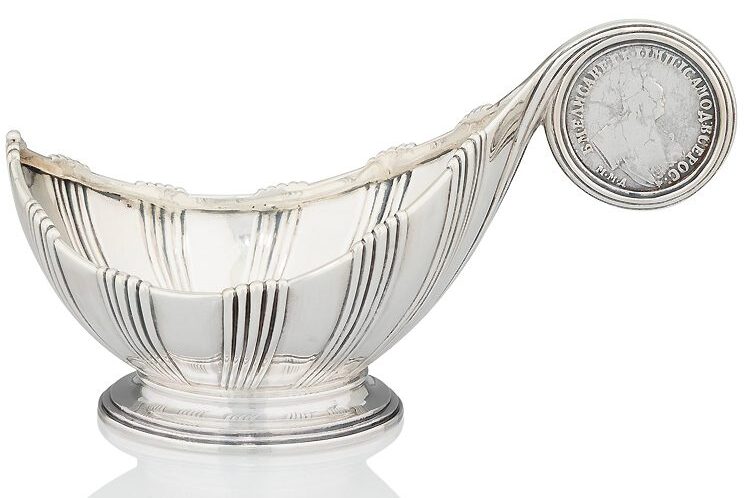 IMPERIAL FABERGÉ COIN-MOUNTED SILVER KOVSH (LOT 42001)
The consignor is, or was, keenly interested in drinking cups – often in coloured enamel, sometimes decorated with old Russian coins. Take a silver Kovsh (Moscow, c.1900) once owned by Alexander III’s exuberant daughter Grand Duchess Xenia, featuring a silver coin in both the handle and at the bottom of the interior (Lot 42001, starting-price $6,400). In one of the laziest pieces of cataloguing I have known, Heritage fail to identify the coins in question. True, they’re both extremely worn – but they’re over 250 years old and extraordinarily rare: one dates from the reign of Peter the Great’s daughter Elizaveta Petrovna (1725-42), the other from that of her nephew Peter III, hapless husband of Catherine the Great… who lasted just 186 days as Tsar in 1762.