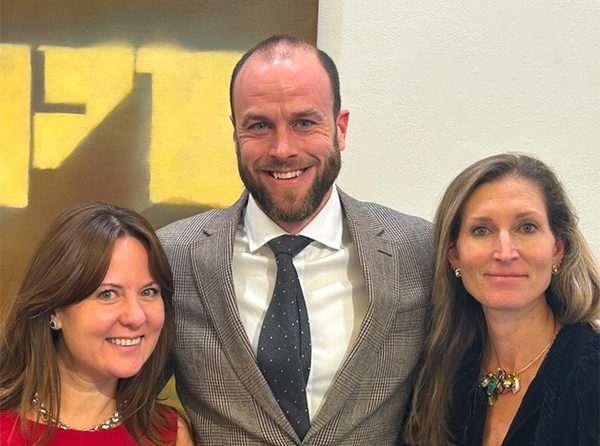
SOTHEBY’S CELEBRATED their return to Russian Art Sales with a stylish sit-down lunch at their New Bond Street premises, convivially hosted by Reto Barmettler (Head of Russian Pictures), Helen Culver-Smith (Head of Russian Works of Art) and Alina Davey (Head of Sotheby’s Collectors Group). Dealers and collectors rubbed shoulders with auction staff in a mood of exuberant bonhomie that offered a gastronomic V-sign to Vladimir Putin’s lunatic attempts to torpedo the civilized world (and the Russian Art Market). It was a delightful, optimistic occasion, enhanced by fine burgundy and medium-rare venison. The festive environment persisted in the café afterwards – just like the good old days, albeit with a much-truncated crowd.
-

- ALINA DAVEY (HEAD OF SOTHEBY’S COLLECTORS GROUP), RETO BARMETTLER (HEAD OF RUSSIAN PICTURES) AND HELEN CULVER-SMITH (HEAD OF RUSSIAN WORKS OF ART)
-
- RUSSIAN ART SALE LUNCH AT SOTHEBY’S (LIKE THE GOOD OLD TIMES!)

The Pre-Sale Viewing, however, was affected by the glowering presence of Alexis von Tiesenhausen. I was in the doorway chatting to Helen Culver-Smith when the grim Tiesenhausen brushed past, fumes of aggressive after-shave trailing in his wake. Christie’s defunct Art Tsar displayed his customary hauteur by failing to acknowledge our presence. Apparently he found my website articles irksome. For sure, the truth sometimes hurts. Yet not one of my articles mentioning Christie’s ever prompted a response during Tiesenhausen’s tenure – let alone any challenge to my analysis.
-
- REST BY THE SEA ON A MOONLIT NIGHT, I. AYVAZOVSKY (LOT 23) — SOTHEBY’S

-
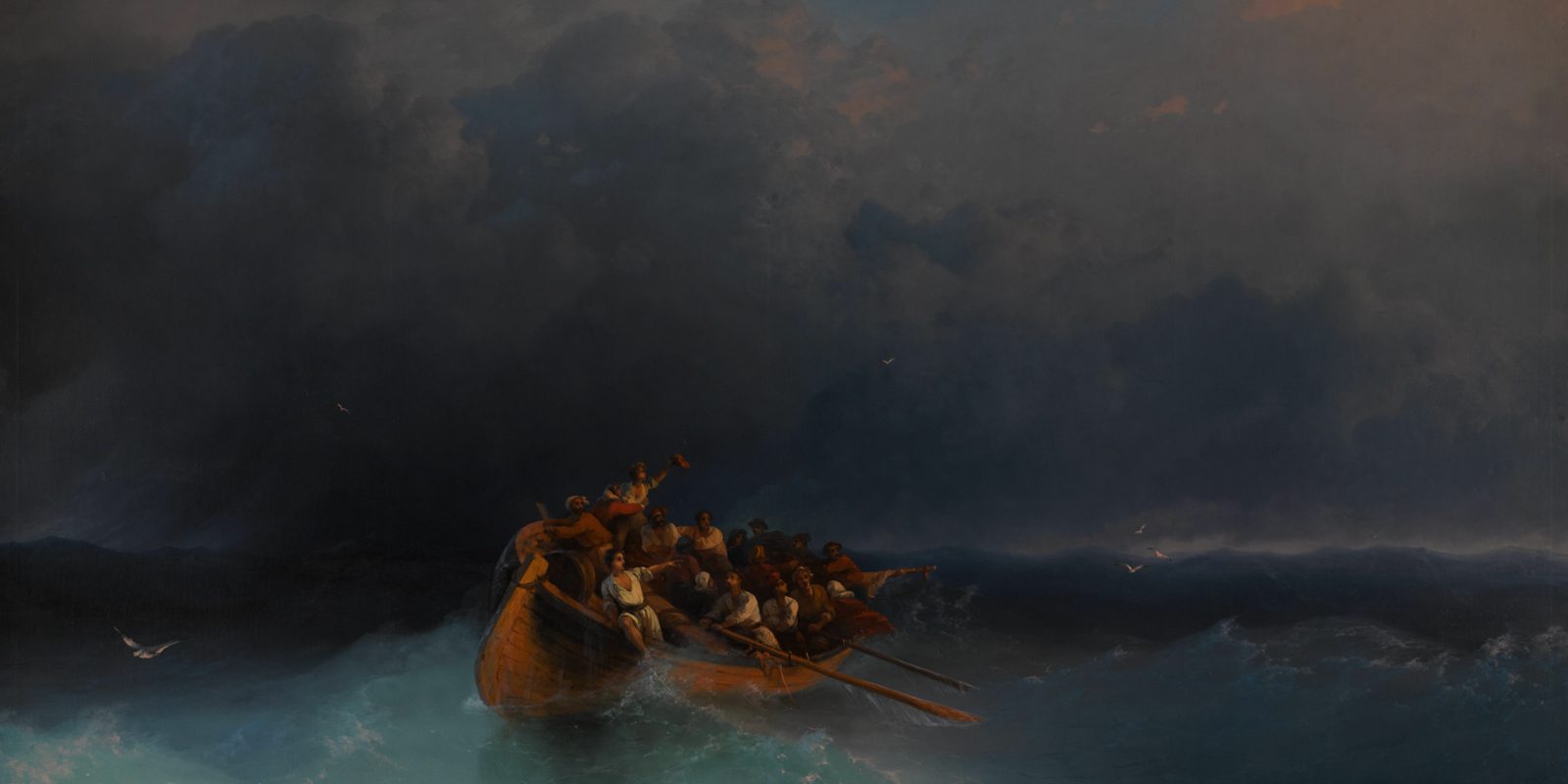
- THE SURVIVORS, I. AYVAZOVSKY (LOT 21) — SOTHEBY’S

-
- PUNTA DELLA DOGANA AND SANTA MARIA DELLA SALUTE, VENICE, I. AYVAZOVSKY (LOT 4)
-
- SAILING BOAT OFF THE COAST OF CAPRI, I. AYVAZOVSKY (LOT 3)
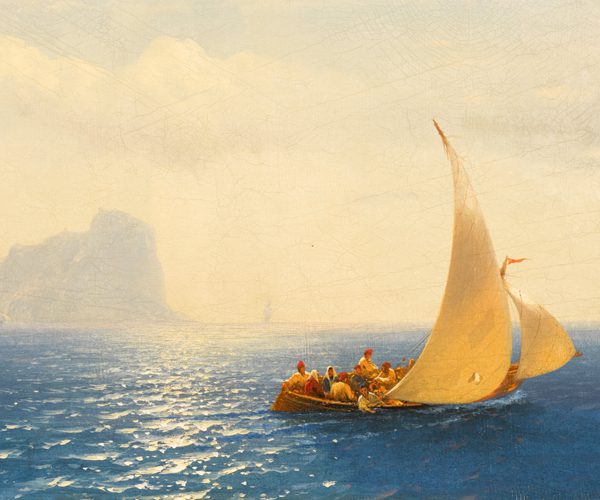
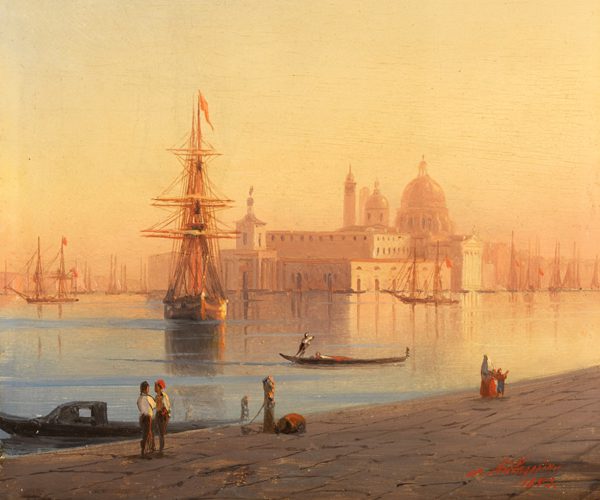
Sotheby’s landmark November 25 sale ran to an imposing 361 lots, of which 264 (73%) sold. Many doubled estimate amidst a flurry of buyer enthusiasm. A plethora of Ayvazovskys set the tone with six prices of over £100,000. A substantial £4,188,000 rewarded his giant, dramatic, 1878 shipwreck Survivors (Lot 21, est. £2-4m), somewhat evocative of Géricault’s Raft of the Medusa. His Rest by the Sea on a Moonlit Night, an 1880 beachscape, followed on £1,016,000 (Lot 23, est. £400-600,000), then came Sailing Boat off the Coast of Capri (1855) at £469,900 (Lot 3, est. £150-200,000) and Sinking Ship in Stormy Waters at £203,200 (Lot 2, est. £80-120,000). His Punta della Dogana & Santa Maria della Salute sold for £177,800, triple high-estimate (Lot 4) – beautifully painted but, at 18 x 14cm, little more than postcard-size.
-
- A GIRL BY A POND, A. SAVRASOV (LOT 22)

-
- TURKISH GIRL, K. MAKOVSKY (LOT 11)
-
- BLOWING BUBBLES, A. HARLAMOFF (LOT 14)
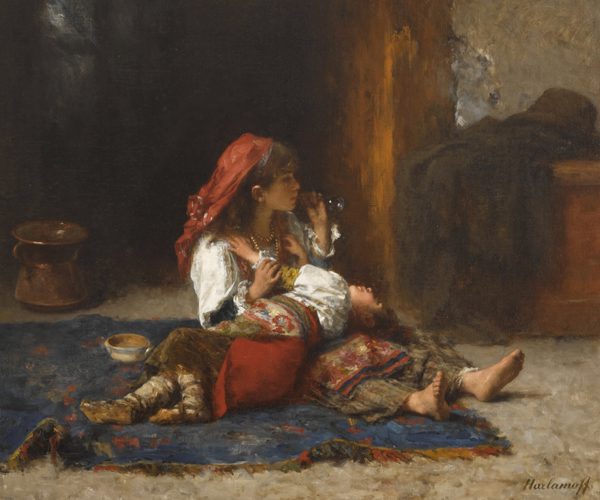
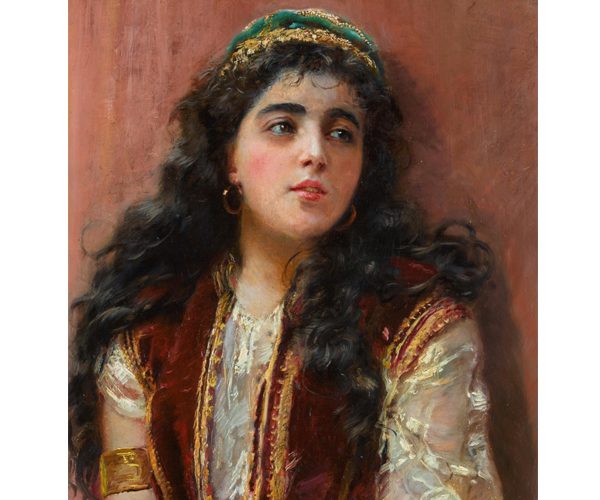
Three other six-figure prices for 19th century works were generated by Girl Power: Harlamoff’s undated Blowing Bubbles took £190,500 (Lot 14, est. £80,000-120,000); Savrasov’s small Girl Tending Cows by a Pond £177,800 (Lot 22, est. £100,000-150,000); and Makovsky’s even smaller portrait of a Turkish Girl £107,950 (Lot 11, est. £30,000-50,000).
-
- OASIS, M. SARYAN (LOT 58)

-
- PROCESSION OUTSIDE ST BASIL’S, B. KUSTODIEV (LOT 48)

Early 20th century highlights began with a 1921 Kustodiev Procession Outside St Basil’s (Lot 48, est. £300,000-500,000) at £952,500. A small 1905 Oasis by Marian Saryan made £304,800 (Lot 58, est. £180,000-250,000). The palette was unusually subdued for the great Soviet colourist – but Saryan’s Armenian compatriots will be singing in the Caucasian Valleys at that sort of price. Incidentally, Armenians also consider Ayvazovsky – born Hovhannes Aivazian to Armenian parents – one of their own (as do Ukrainains, given that he was born in Crimea). Be all that as it doubtfully may, the biggest Ayvazovsky collections are in Russia, where he is one of the Motherland’s most revered artists… as prices for his works reflect.
-
- BARGES IN NOVGOROD, K. GORBATOV (LOT 49)

-
- MATIN D’HIVER À ST-MORITZ, I. CHOULTSÉ (LOT 50)

-
- WINTER LANDSCAPE – OKHOTINO, K. KOROVIN (LOT 51)

Gorbatov’s 1913 Barges in Novgorod floated to £279,400 (Lot 49, est. £120,000-180,000). Other works to double estimate included Korovin’s Winter Landscape – Okhotino (1922) with £165,100 (Lot 51, est. £60,000-80,000) and Choultsé’s Matin d’Hiver à St-Moritz (1935) on £101,600 (Lot 50, est. £30,000-50,000).
-
- MOULIN ROUGE WITH RED SKY, O. RABIN (LOT 107)

-
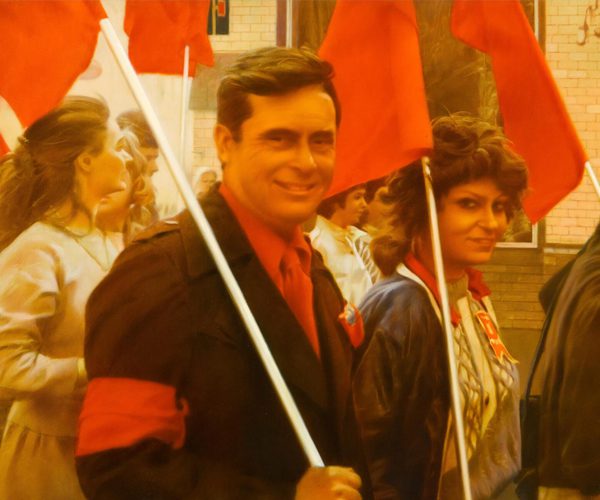
- BEAUTY (WORKERS’ MARCH SERIES), S. FAIBISOVICH (LOT 89)
-
- THAT IS THE QUESTION, S. FAIBISOVICH (LOT 87)

-
- STREET AT NIGHT, E. BULATOV (LOT 86)

Non-Conformist, late Soviet art enjoyed comparable success in the wake of Semyon Faibisovich, whose Beauty (from his 1988 Workers’ March series) claimed £203,200 (Lot 89, est. £100,000-150,000); his large 1987 painting That Is The Question took £107,950 (Lot 87, est. £50,000-70,000). Erik Bulatov’s enigmatic 1966 Street at Night (Lot 86, est. £100,000-150,000) raked in £165,100, Ivan Chuikov’s 1989 Fake (Lot 84, est. £80,000-120,000) made £139,700 and Oskar Rabin’s Moulin Rouge with Red Sky (1988) took £63,500 (Lot 107, est. £10,000-15,000).
FABERGÉ WORKS OF ART
-
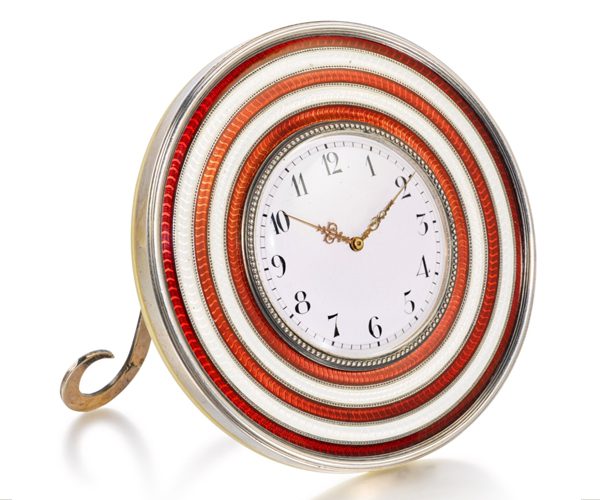
- CIRCULAR SILVER ENAMEL DESK CLOCK, M. PERKHIN (LOT 124) — SOTHEBY’S
-
- SQUARE SILVER-GILT ENAMEL DESK CLOCK, M. PERKHIN (LOT 122)

-
- TRIANGULAR SILVER-GILT ENAMEL DESK CLOCK, M. PERKHIN (LOT 125) — SOTHEBY’S

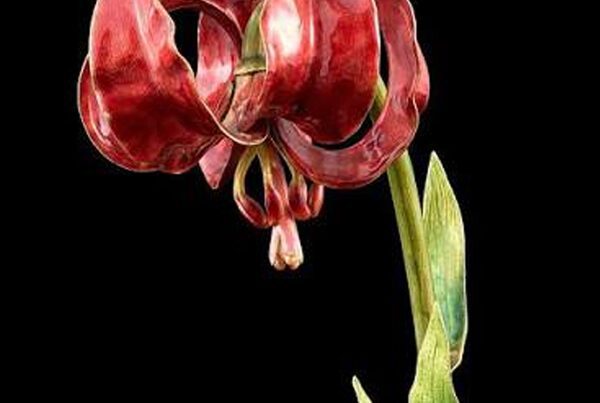
The sale’s anticipated Fabergé highlight – a triangular silver-gilt and red guilloché enamel desk-clock by Mikhail Perkhin – went unsold against an estimate of £150-250,000 (Lot 125)… leaving another Perkhin clock, again with red guilloché enamel but this time circular in shape, as the sale’s top Fabergé price with £139,700 (Lot 124, est. £120-180,000). A square Perkhin clock with pale blue enamel fetched £78,740 (Lot 122, est. £60-80,000).
 SILVER FLATWARE SET, J. RAPPOPORT (LOT 169)
A 235-piece silver canteen by Julius Rappoport made £91,440 (Lot 169, est. £40-60,000). The price no doubt benefited from the presence of its original fitted case, but it’s hard to imagine a more boring set of silver. Great in the kitchen, maybe – but not something to unveil in front of lords, ladies or Alexis von Tiesenhausen. Still: if this sort of caboodle can double estimate, that’s a pretty good sign!
-
- JEWELLED AVENTURINE QUARTZ OWL, ANON. (LOT 113)

-
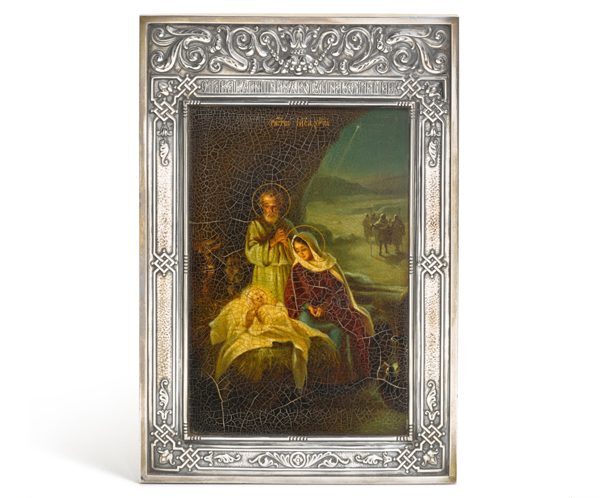
- SILVER-MOUNTED ICON, H. ARMFELT (LOT 166)
-
- THE VIRGIN HODEGETRIA, A. RITZOS (LOT 343)
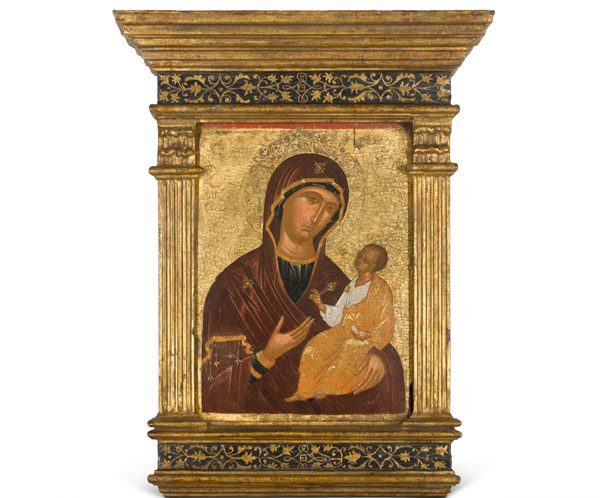
Leading hardstone figure was a jewelled aventurine quartz model of an Owl (c.1900) at £50,800 (Lot 113, est. £20-30,000). A silver-mounted icon by workmaster Hjalmar Armfelt (St Petersburg 1908-17) took £40,640 (Lot 166, est. £15-25,000). A far earlier icon, of the Virgin Hodegetria attributed to Crete’s Andreas Ritzos (1421-92), languished unsold (Lot 343, est. £80-120,000).
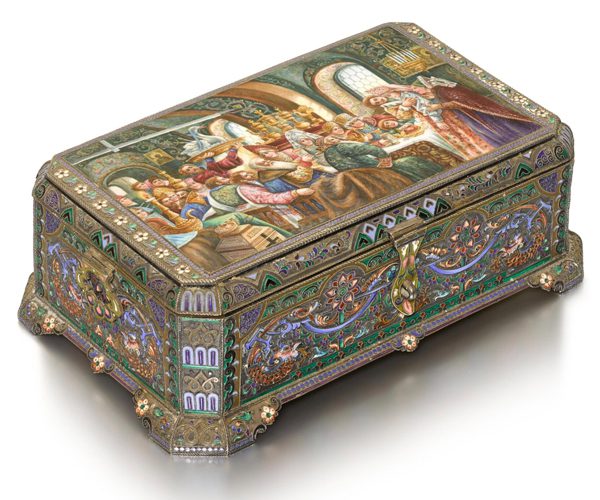
SILVER-GILT CLOISONNÉ ENAMEL CASKET, 11TH ARTEL (LOT 196)
A silver-gilt cloisonné and guilloché enamel casket by the 11th Artel (Moscow 1908-1917), its lid with yet another en plein enamelling of Makovsky’s Boyar Wedding Feast, sped to £95,250 (Lot 196, est. £60,000-80,000). Just how many items incorporating this bloody Wedding Feast were actually produced – by Artels, Rückert, or anyone else?
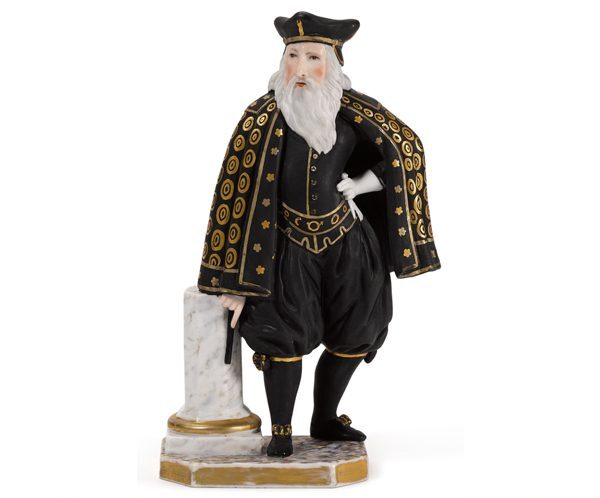
BISCUIT FIGURE OF LEONARDO DA VINCI, POPOV (LOT 293)
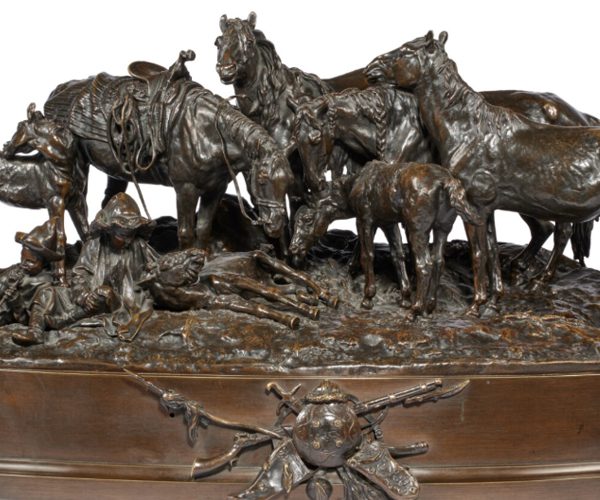
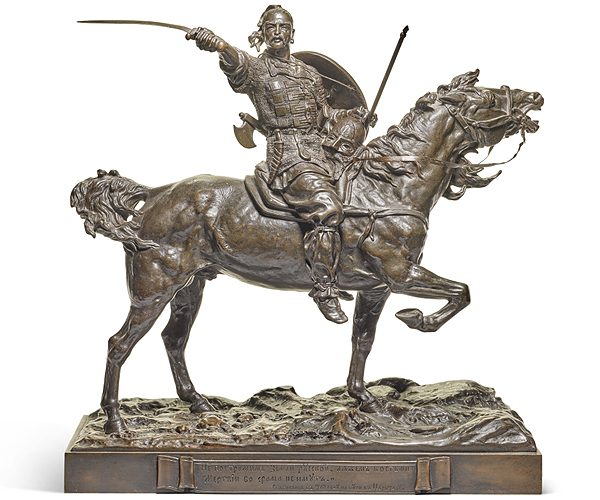
A whimsical mid-19th century biscuit figure of a white-bearded, black-clad Leonardo da Vinci from the Popov Factory clawed its way to £3,048 (Lot 293 est. £3,000-4,000). Three late 19th century bronze groups after Evgeny Lanceray all doubled low-estimate: Bogatyr (Ilya Muromets), cast by Chopin, on £82,550 (Lot 325 est. £40,000-60,000); Kirghiz Herd at Rest with £60,960 (Lot 362, est. £30,000-50,000); and Svyatoslav Riding to Tsargrad, cast by Gavrilov, at £50,800 (Lot 359, est. £25,000-35,000).
-
- BOGATYR (ILYA MUROMETS), E. LANCERAY (LOT 325)

-
- KIRGHIZ HERD AT REST, E. LANCERAY (LOT 362)
-
- SVYATOSLAV RIDING TO TSARGRAD, E. LANCERAY (LOT 359)
There was no auction catalogue. Auction houses rarely print catalogues these days. Their excuse is cost. Come off it! I print limited-edition catalogues whose cost per copy are negligible. A 500 print-run with soft cover costs about £10 a copy. 500 copies cost me £5,000. When an auction firm sells one £100,000 picture, they make 25% from the buyer – i.e. £25,000. It’s a shame that number-crunchers, compliance officers and accountants run auctions these days, not art experts. Sure, experts need accountants – but turning the art business into a corporate/bureaucratic quagmire does not bode well for the market’s future.
Catalogue or not, it was good to see prices exceeding those of yesteryear, and to meet up again with old-timer dealers – my brothers-in-arms: art troopers fighting battles on the Russian front. Turns out it’s not All Quiet on this Russian Art Front: the interest is there, with Russian pictures breaking long-established records.
Of course, sanctions obligent, most people at the sale were dealers or Russian ex-pats; only a few Russians from Russia came. For that we can thank the nightmare created by Vladimir Putin. According to this bastard the shooting and wholesale slaughter of the past four years do not constitute ‘war’: he prefers the asinine term ‘special military operation.’ Screw the bastard! A war’s a war! Obviously a war doesn’t help the market… yet the market’s still percolating, like a good samovar.