
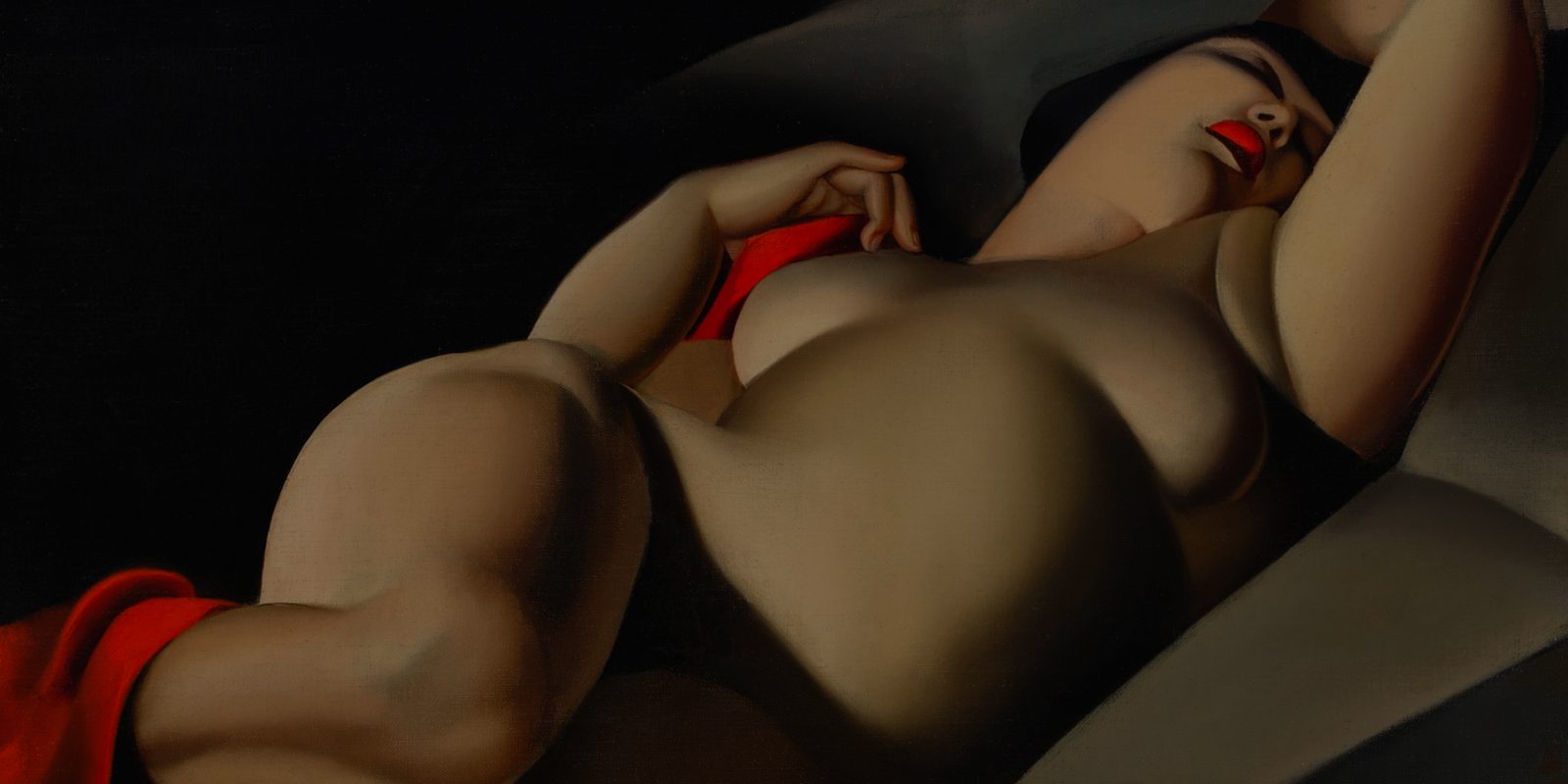
Although commonly considered Polish, Tamara de Lempicka (1894-1980) was actually Russian – born Мария Гурвич-Гурская (Maria Gurvich-Górska) in Moscow to a Polish mother and Jewish Russian father.* She only became Polish after marrying Tadeusz Łempicki (no ‘de’) in 1915. The Russian Revolution pushed them to Paris, where Tamara established her artistic reputation; they divorced in 1931. Tamara’s second and final husband (amidst countless lovers of either sex) was Hungarian Baron Raoul Kuffner de Diószegh. They married in 1934 and moved to the United States in 1939, living in California and New York. After Kuffner’s death in 1961 Tamara moved first to Houston, then to Mexico.
There’s been a recent outburst of Tamara Mania in her adopted America. First, starting 28 March 2024, came a three-week selling exhibition at Sotheby’s New York. Before it had ended, Lempicka – a musical about Tamara’s eventful life – was up and running on Broadway: 41 shows at the Longacre Theatre, with Eden Espinosa in the starring role. Then, on October 12, came the opening of the first U.S. Tamara de Lempicka retrospective: a lavish affair with 120 works (several lent by the Pompidou Centre) that ran for four months at the De Young museum in San Francisco (where Tamara first exhibited in 1930) then three more at the Museum of Fine Arts in Houston (where Tamara lived from 1963-78).
One of the star exhibits – in San Francisco at least – was La Belle Rafaëla (1927). This 65 x 91cm oil painting was sold at Sotheby’s London on June 24 while the Houston show was still on, making £7.475m ($10m). It had been owned since 1997 by cricket-loving lyricist Tim Rice (‘the most expensive thing I ever bought’). Other Lempicka fans from the world of showbiz include Madonna, Jack Nicholson and Barbra Streisand. It’s easy to see what grabs them: Tamara’s art was influenced by cinematography and has glitzy, glib appeal. She also drew inspiration from the Italian Renaissance – which her grandmother hawked her off to look at in Italy when she was a teenager. The sharp precision of Tamara’s smooth brushwork recalls Bronzino.
 LA BELLE RAFAËLA
La Belle Rafaëla helped propel Tamara into the artistic spotlight at the 1927 Salon d’Automne. She had met her model earlier that year in the Bois de Boulogne, where Rafaëla was out street-walking. ‘I took her home in my car. We had lunch and, after lunch, in my studio, I said: “Undress, I want to paint you.” I painted her for over a year.’ Those pictures also include La Tunique Rose (Rafaël in a slinky red night-dress), sold for $13.3 million at Sotheby’s in 2019; and Le Rêve (Rafaël topless with arms folded), sold for $8.5m at Sotheby’s in 2011.
Tamara’s top price is $21.2 million, for her 1932 Portrait de Marjorie Ferry at Christie’s in 2020. That’s peanuts compared to the $157.2 million racked up by Modigliani’s Nu Couché at Sotheby’s New York in 2018. Are you telling me Modigliani is over seven times a better painter than Tamara? Come off it! He’s massively over-valued… and Tamara, doubtless because she was a woman, is chronicly under-valued.
-

- MODIGLIANI

-
- SEREBRIAKOVA
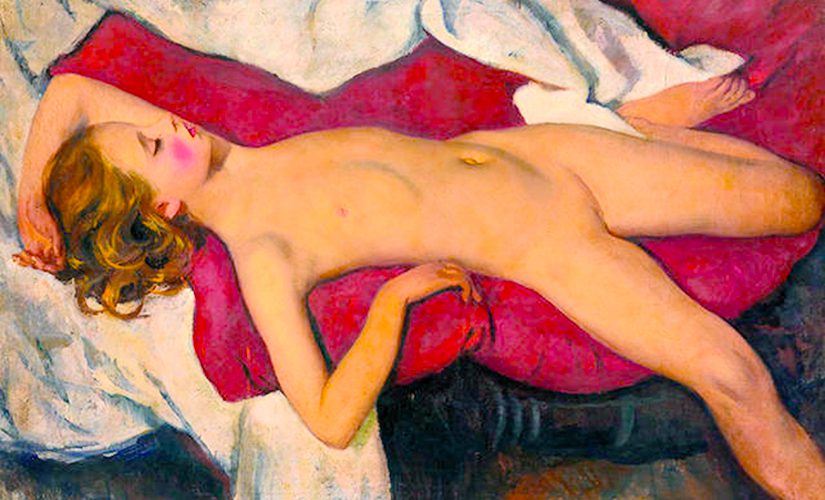
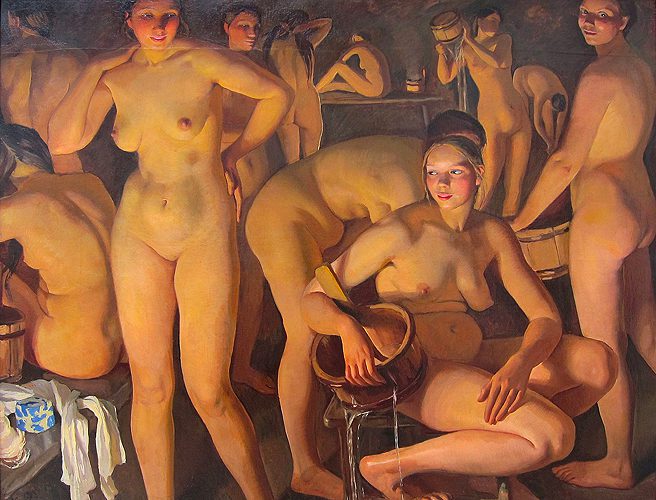
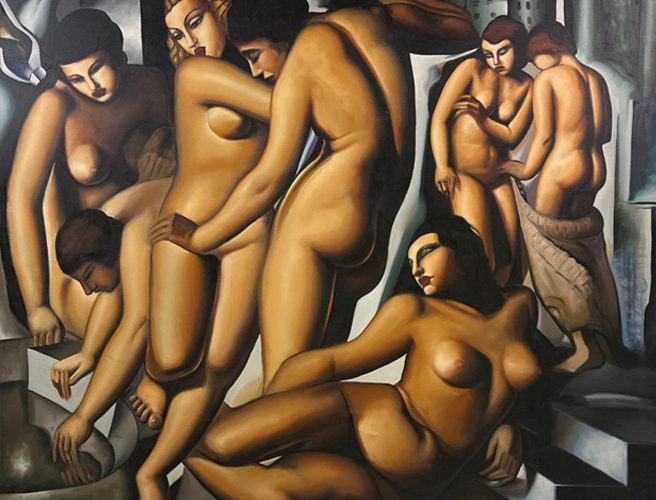
The cool, erotic appeal of Tamara’s nudes is often said to echo those painted by Ingres, the French 19th century Academic – but a fellow Russian exile deserves to be cited in this context. With its scarlet drapes and lascivious pose, Zinaida Serebriakova’s 1923 Sleeping Girl (sold for £3.85m by Sotheby’s in 2015) is a prepubscent forerunner of La Belle Rafaëla – much as Zinaida’s famous Banya (1913) finds an echo in Tamara’s unfinished Femmes au Bain (1929). Again, compared to Modigliani, you’d have to say Zinaida is massively under-priced – no doubt for sexist reasons.
-
- SEREBRIAKOVA
-
- LEMPICKA
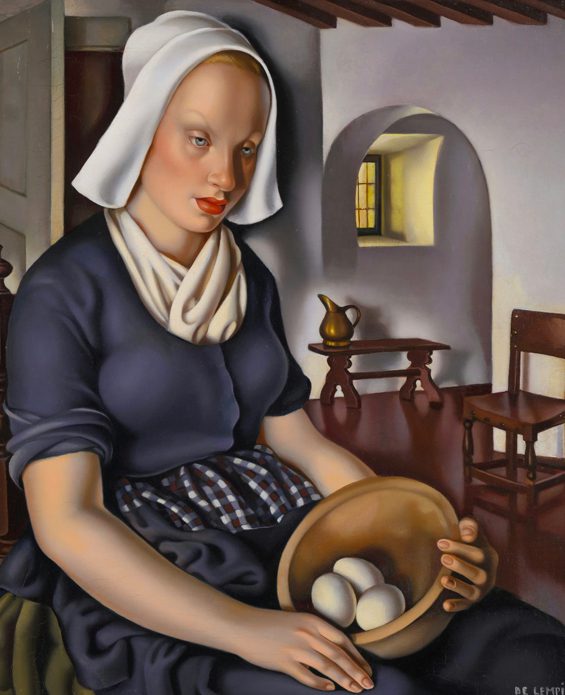
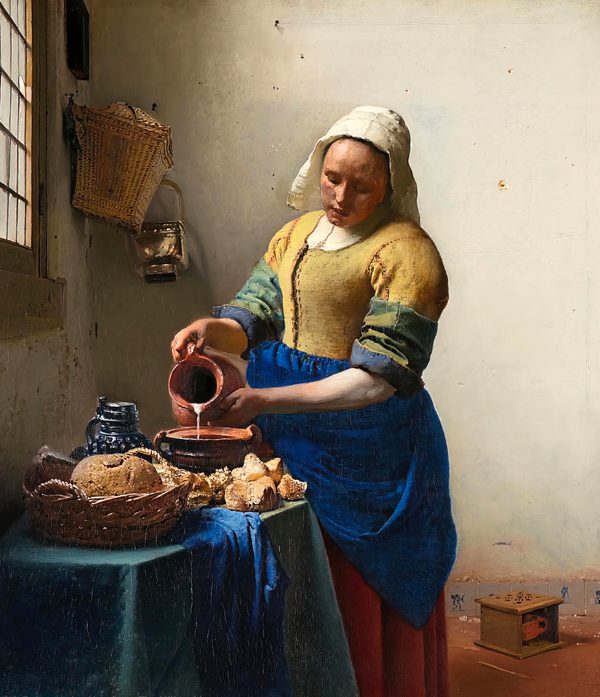
Sex sells. Take the saleroom fate of a later and chaster Lempicka: her Jeune Hollandaise from 1941, offered at Rossini in Paris on July 3. This enigmatic and accomplished painting, 64 x 56cm, is said to evoke Vermeer’s Milkmaid (c.1658) but got no further than €920,000 (est. €400-700,000).
-
- JEUNE HOLLANDAISE
-
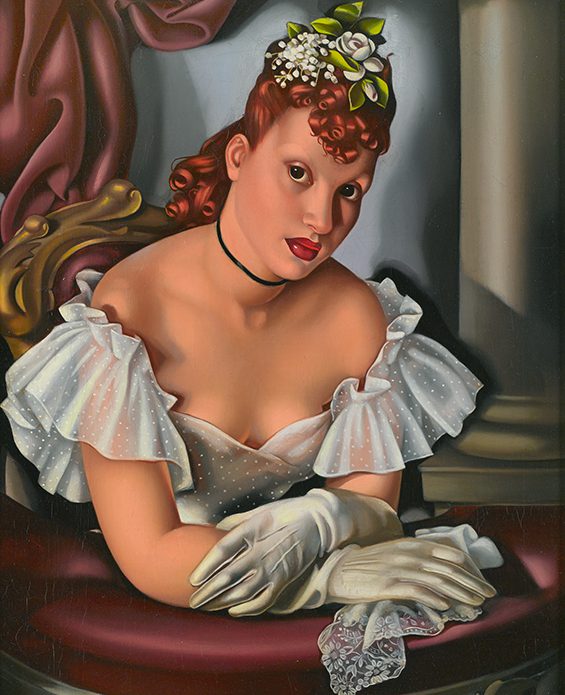
- À L’OPÉRA
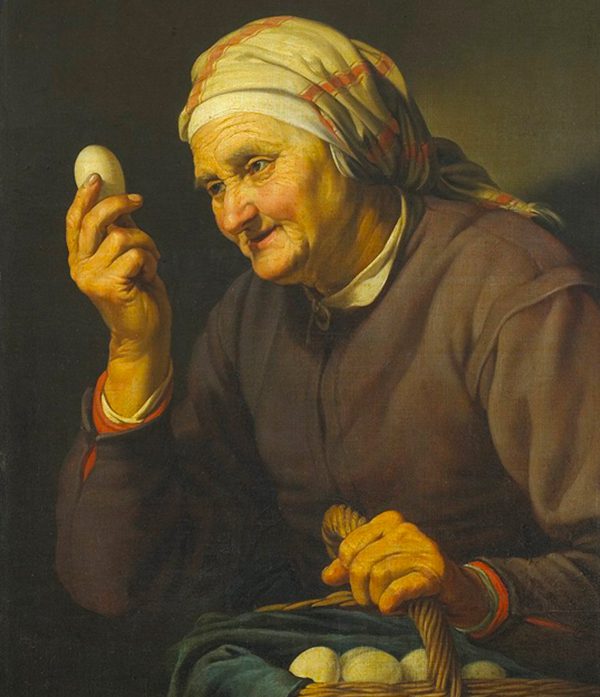
The Vermeer comparison may be true of the white head-dress and bare forearms, but the erudite Tamara doubtless had another work from the Rijskmuseum in mind too: Hendrick Bloemaert’s Woman Selling Eggs (1632).
-
- VERMEER
-
- BLOEMAERT
Jeune Hollandaise was shown at the 1944 Salon d’Automne, held in Paris soon after the Liberation, and in 1955 by Galerie André Weil at 26 Avenue Matignon (now home to Galerie Malingue). The picture was bought by Louis Riz in 1947 and consigned to the Rossini auction firm by his descendants. A second version, La Hollandaise II (c.1957), graces the Muzeum Narodowe w Lublinie in Poland.
I have a Lempicka myself: À L’Opéra, also from 1941 but just a little larger – fairly chaste, though with an enticing hint of cleavage (see above right).
* Laura Claridge : Tamara de Lempicka – A Life of Deco and Decadence (1999)