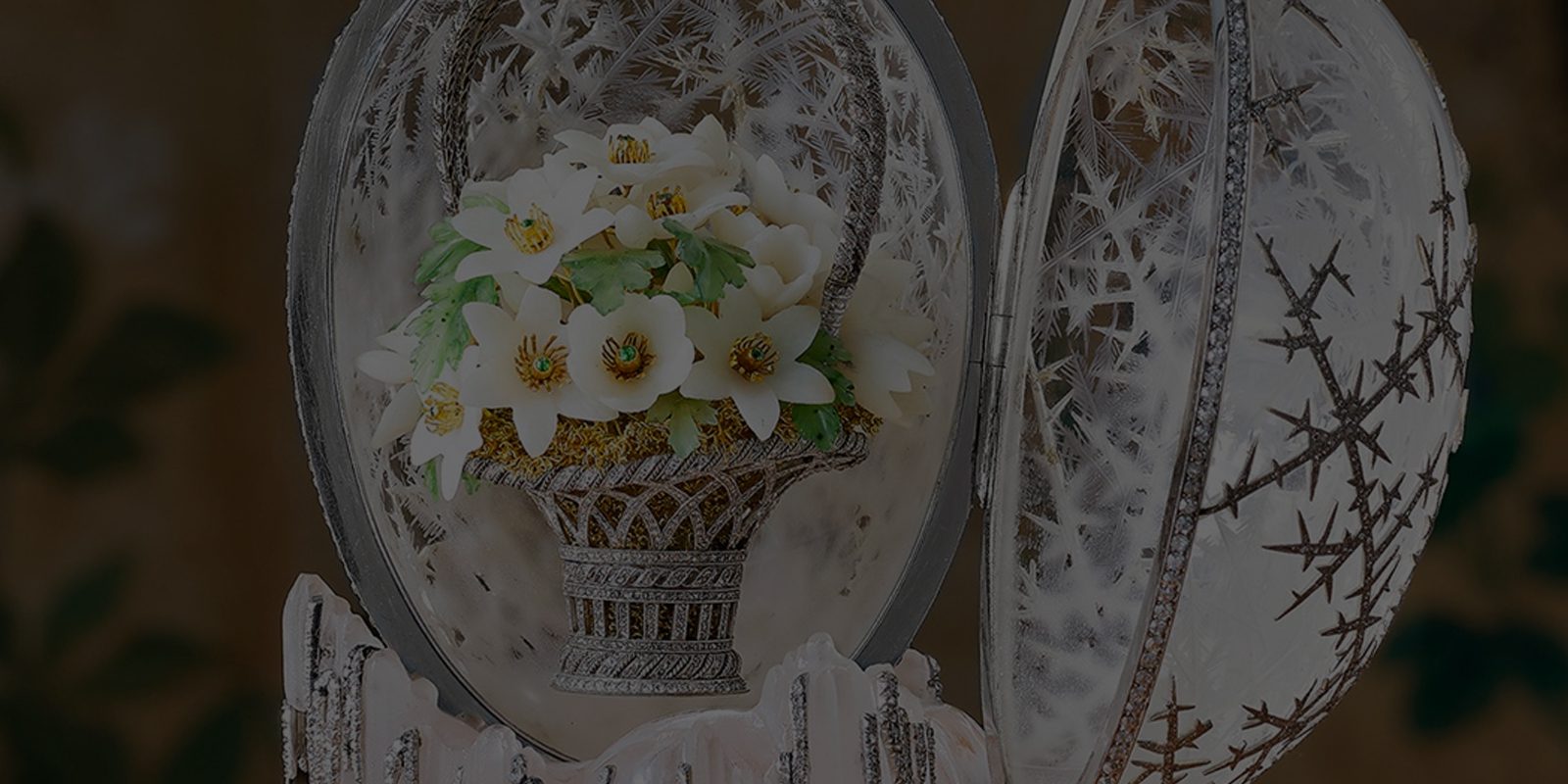
Christie’s London 5pm December 2. Fabergé’s Winter Egg on the block. Saleroom crammed. Atmosphere tense. Drama in the air.
 Lot 7, Imperial Winter Egg
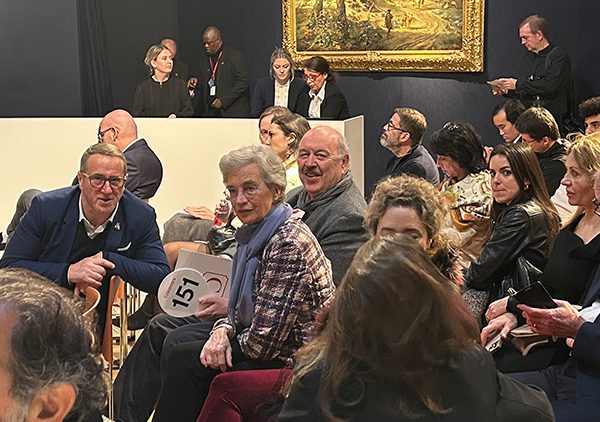
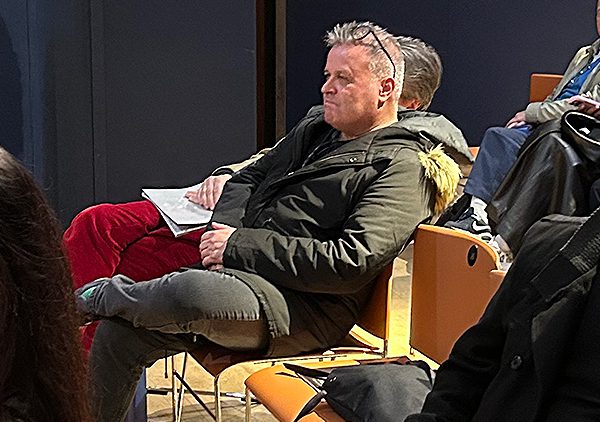
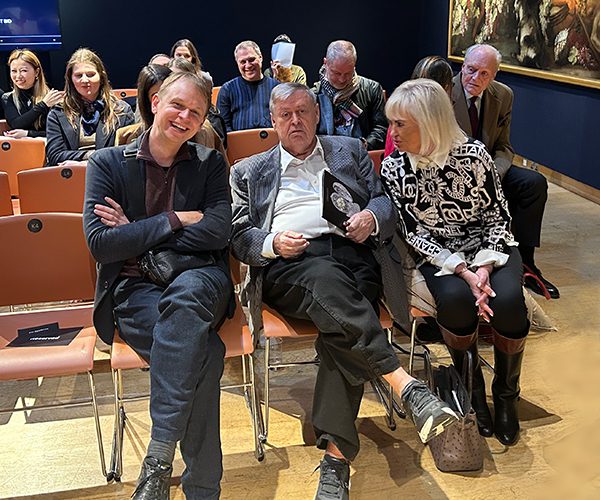
Хлеба и зрелищ еще никто не отменял, даже в центре Лондона. Bread and circuses had not been cancelled even in central London (to paraphrase Juvenal’s reference to Rome’s dream of panem et circenses). In the saleroom: smiles and handshakes all round. People exchanging views on the likely outcome of the sale, all hoping to witness a compelling event. Nobody objected to being photographed – except Alexis von Tiesehausen, erstwhile ‘Tsar’ of the Russian art market. How distressing to find himself at Christie’s, his empire for many a year, as just another neighbourhood gawker. When he saw my camera pointed in his direction Tsar Alexis tried to hide behind a friend of mine. In vain. His scarlet trousers gave him away.
-

- Scarlet trousers of Alexis von Tiesehausen
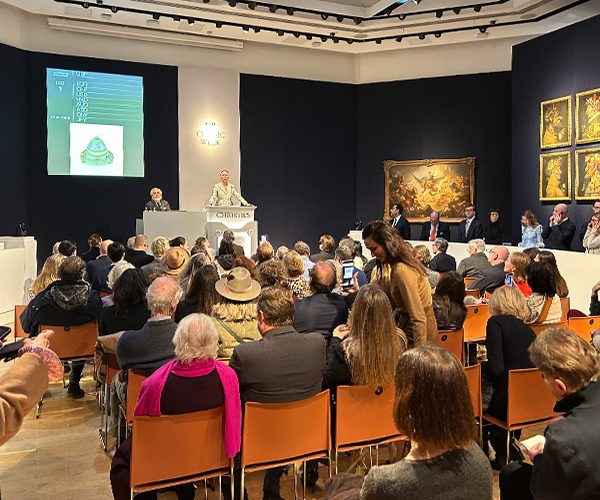
Auctioneer Yü-Ge Wang, in contrast, was arrayed in wintery white. Millions upon millions could be spent in the next few minutes. A good friend of mine – a Fabergé expert of long standing – expected the Egg to sail past £50 million. Others were more cautious, but optimistic nonetheless.
-
- Christie’s saleroom
-
- Kieran McCarthy – The Egg Winner
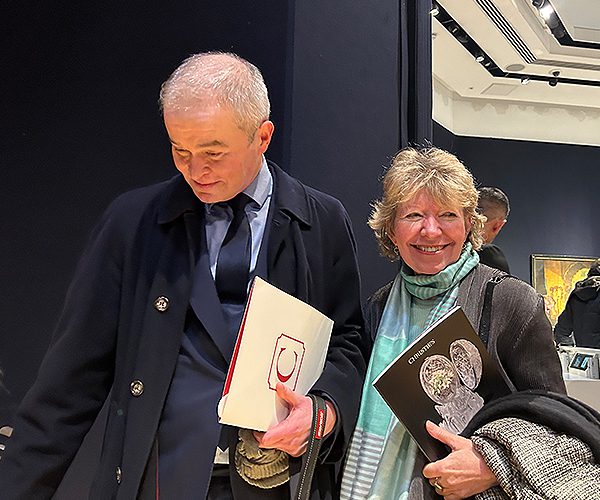

The expectations fell flat. No fierce battle. A low-key performance. The ‘bidding’ lasted barely a minute. Only one bid: Kieran McCarthy (Wartski). No one else raised a paddle. No phone bidders. The hammer fell at £19.5m, most likely on the reserve. I felt the £20-30m estimate was optimistic given that no Fabergé Egg had ever having reached £20 million at auction. The premium-inclusive price of £22,895,000 ($30.2m) set a new record for a work by Fabergé – more than double the previous high: £8.9m for the Rothschild Egg in 2007. In a previous article I wondered if the Egg would sell or not: in my mind it was 50-50. I was almost right!
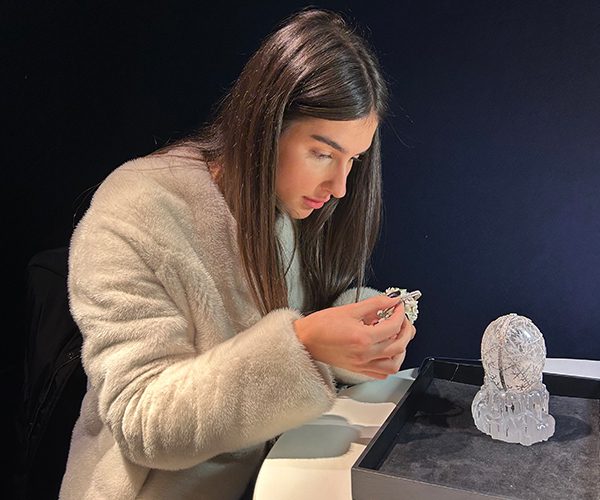
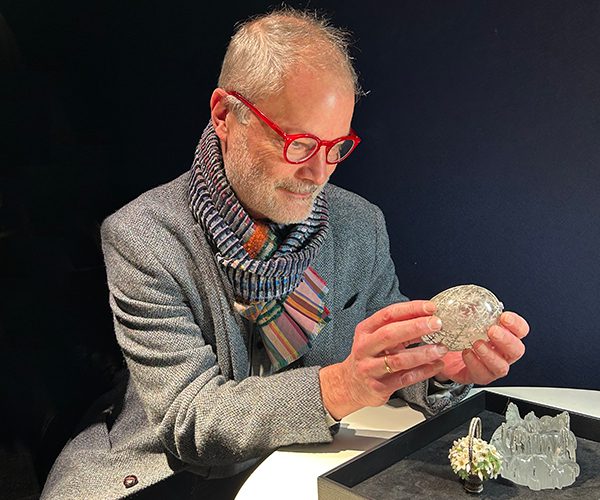
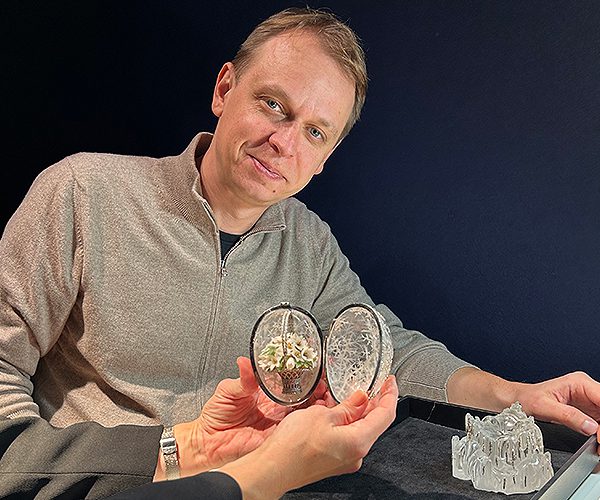
The Winter Egg stands 14.2cm high and was made from rock-crystal by workmaster Albert Holmström to the designs of Alma Pihl, his niece. It was commissioned by Nicholas II as a gift for his mother, Dowager Empress Maria Feodorovna, in 1913, year of the Romanov tercentenary. It cost the Tsar 24,600 rubles – making it the third most expensive Egg Fabergé ever produced. The Winter Egg starred at the V & A’s blockbuster Fabergé exhibition in 2021-22. Margo Oganesian, Head of Christie’s Russian Department, likened it to ‘the Mona Lisa of Decorative Arts.’
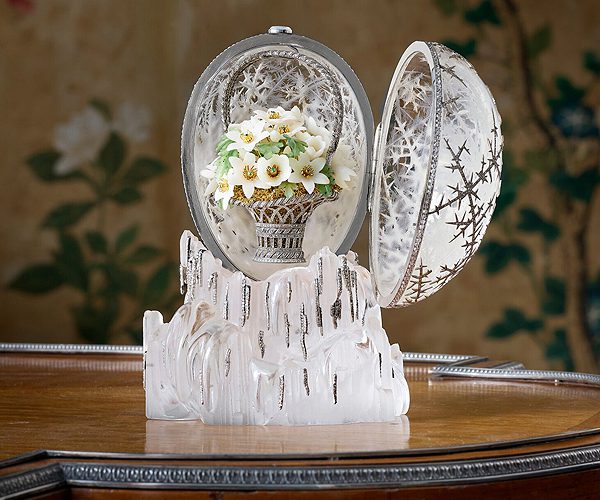 Lot 7, Imperial Winter Egg
To my mind the Winter Egg is one of the most exquisite Fabergé ever created. To some it is unquestionably the most beautiful. Christie’s sale result may have seemed lukewarm, but I reckon it was spot-on. No other Fabergé Imperial Easter Egg with an undisputed provenance has ever commanded a higher price at auction. After selling for CHF7.3m in Geneva in 1994, then $9.6m in New York in 2002, the Winter Egg has set a new benchmark. The last Fabergé Imperial Egg to come on the market was the Third Imperial Egg (1887), sold by Wartski in 2014 after surfacing at a flea market or garage sale in the American Mid-West.
That did not stop a number of bloggers, some anonymous, from slandering the Winter Egg with hollow, unsubstantiated, worthless assertions. A certain Boris Cohen claimed it was one of two fake Winter Eggs made by ‘the notorious jeweller and stonecutter Mark Stoney’ for an American client in the 1990s. I presume Cohen was stoned when he wrote that. A ‘jewellery expert’ exotically styled Apollinaria Vena presented a venomously incompetent analysis of the Winter Egg, claiming the Egg’s frost pattern was ‘questionable’ and the shape of the icicles on the base ‘pretty unusual.’ Then there was Ira Sevryukova – another fishy character (sevruga in Russian is a member of the sturgeon family) – who ‘creates works inspired by Fabergé’s heritage.’ Fakes or reproductions, in other words. How does that qualify her to pronounce on authenticity? Evgenia Alexeevna (no surname given) was another ‘expert’ who saw fit to proclaim her views.
The idea that Christie’s sold a phoney egg is preposterous. Cohen claimed the ‘real’ Winter Egg was made from topaz, not rock crystal, and accused Margo Oganesyan of being ‘blinded by the potential large profit from the auction’ into failing to conduct a gemmological examination ahead of the sale. What rubbish! Margo is Tiesenhausen’s replacement as Head of Christie’s Russian Department; all she did was accept a prestige consignment from Qatar. There was nothing ‘in it’ for her.
Cohen also opined that the scratched signature indicated that Christie’s Egg was intended for export to London, so could never have been an Imperial gift; while Apollinaria Vena found the quality of this signature ‘highly questionable and ‘strangely sub-standard.’ What garbage! What a pair of ignoramuses! Who are these people? What sort of holes have they crawled out of? None of these bloggers came to London to view the Egg. None have ever handled it. None expressed an opinion before the sale. Coming to London has become an expensive outing for Russian ‘experts’ thanks to Putin’s slaughter in Ukraine, and getting a UK visa is a major obstacle. Not to worry: such charlatans are better kept at the gates of the civilized world!
Many in the room beat a hasty retreat once Yü-Ge’s hammer had fallen – leaving behind a select group of Fabergé aficionados, dealers and collectors. All told, Christie’s 48-lot Russian Sale totalled £27.8 million ($36.7m), with 80% of lots clearing top-estimate and just four left unsold. A dozen items were worthy of interest, alongside a stream of run-of-the-mill material ideal for debutant Fabergé collectors: there were registered bidders from 31 countries, many of them ‘millennial or younger’ (in Margo’s words).
-
- FIGURE OF A STREET PAINTER (LOT 22) — CHRISTIE’S

-
- Hardstone Figure of a Cossack

-
- Hardstone Figure of a Boyarin
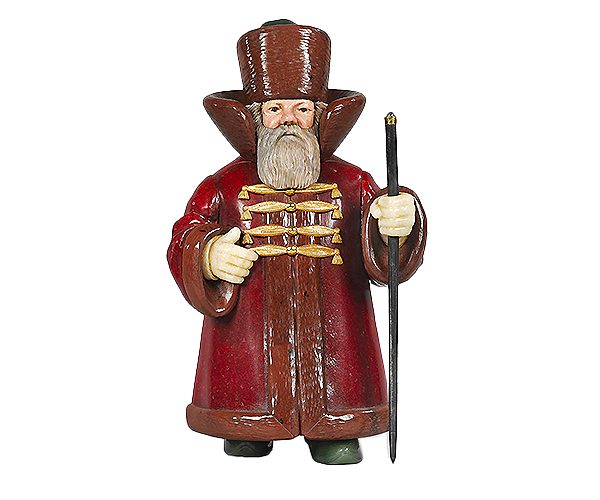
A witty hardstone model of a Street Painter, modelled by Boris Froedman-Cluzel in 1916, brought £1,514,000 ($2.0m). Only sixty or so of these hardstone figures were ever produced by Fabergé, making them almost as rare as Imperial Easter Eggs. The Painter must have been pretty much the last one ever made (Lot 22). Everybody expected the Painter to sell for even more: it’s a beautiful, well-crafted and amusing figure, one of the best human figures Fabergé ever produced, complete with its original case, and was once owned by the distinguished Fabergé collector/ oil tycoon Emanuel Nobel (1859-1932). Even so, it attracted just one (Internet) bidder. I suspect the £1.2m hammer-price was bang on the reserve: maybe prospective buyers were deterred by the ambitious £1.5-2m estimate. I reckon an estimate of £800,000-1.2m would have elicited some bidding. The Painter last appeared at auction in 2003, when it fetched a premium-inclusive £845,250 against an estimate of £120-150,000. So the 2025 price of £1.51m represented a poor return for the buyer in terms of investment: £845,000 in 2003 is worth £1.56m today (according to the Bank of England’s Inflation Calculator), once inflation is taken into account. His money would have been better off placed in a bank, earning interest!
The all-time high for a Fabergé hardstone figure remains the $5.98m paid for a 1912 figure of the Tsarina’s Cossack bodyguard Nikolai Pustynnikov at Stair Galleries in Hudson (N.Y.) in 2013. By my reckoning the Painter now ranks second, ahead of the purpurine Boyar sold for $1.8m at Sotheby’s New York in 2005.
 Lot 13, Gold‑Mounted Nephrite Model of a Sleigh
The third big price at Christie’s was a vibrant £736,600 ($972,000) – £580,000 hammer – for another very rare piece: a gold-mounted nephrite rococo model of a Sleigh by Michael Perkhin (c.1890) once owned by Italian fashion designer Donna Simonetta Colonna. I don’t remember another Fabergé sleigh ever riding into the saleroom. Christie’s claim only one other was made, in gold and guilloché enamel, by Henrik Wigström around 1911; it is now part of the Thailand Royal Collection (Lot 13, est. £350-450,000).
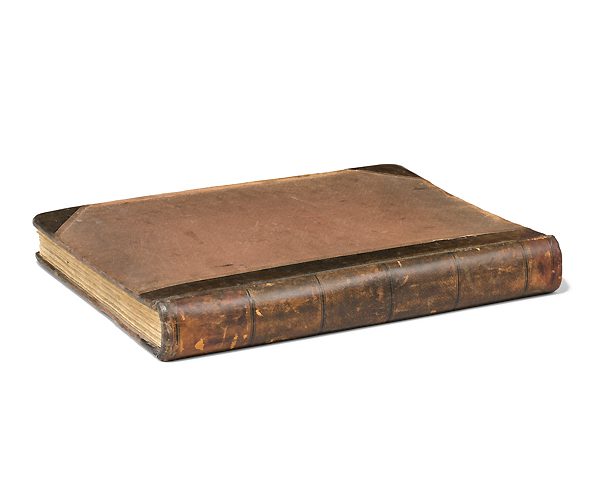
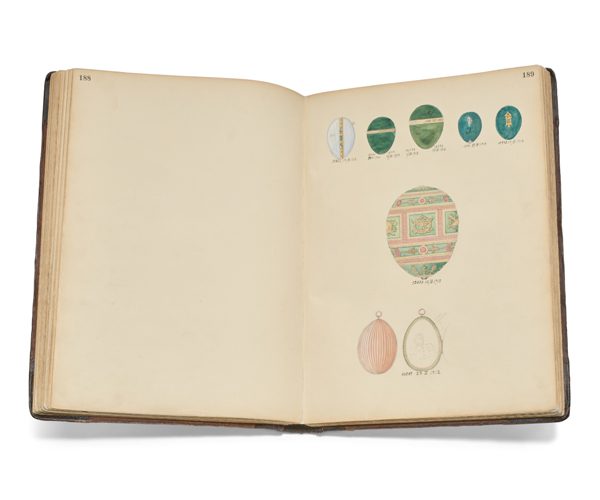
Lot 48, Design Album from the Workshop of Henrik Wigström
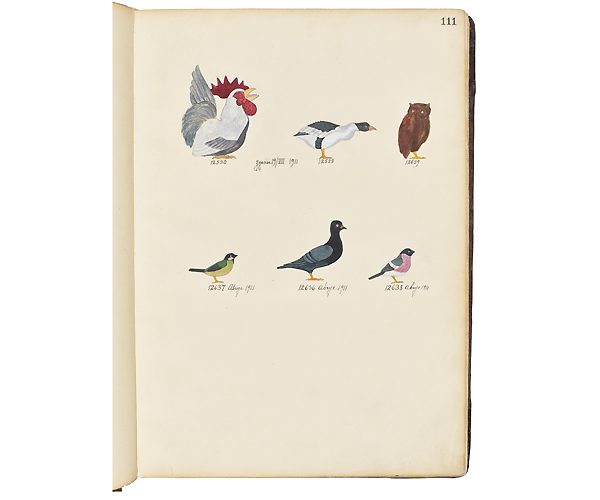
A drawing of this latter Sleigh (a curious item to find in tropical Thailand, if you come to think about it) appears in the 400-page Design Album from the Wigström workshop (formerly owned by Wartski) that was also offered at Christie’s. The album attracted a single bid of £400,000 (£508,000 with premium) – the auction’s third major lot to sell without a fight on the reserve (Lot 48). Ahead of the auction the £500-800,000 estimate had me smirking: I was sure the album wouldn’t sell – even if it contains illustrations of a thousand Fabergé items made between 1911-16, and researchers go woozy at that sort of thing (Ulla Tillander reproduced some of the album’s drawings in her 2000 book Golden Years of Fabergé: Drawings and Objects from the Wigström Workshop.
When something doesn’t attract bidding an experienced buyer waits for it to be ‘passed,’ then offers the auction-house a lower sum afterwards. I found a bid of £400,000 excessive and hard to justify. Who on earth wants to spend £508,000 (with premium) on a book that belongs in the Moscow Kremlin or in St Petersburg’s Fabergé Museum? That said, I suspect the album would be a godsend to forgers – enabling them to precisely replicate Fabergé originals and present them to clients together with pictures from the album. Was it purchased by one of these creatures of the dark?
Lot 42, Guilloché Enamel Two‑Colour Gold‑Mounted Bonbonnière
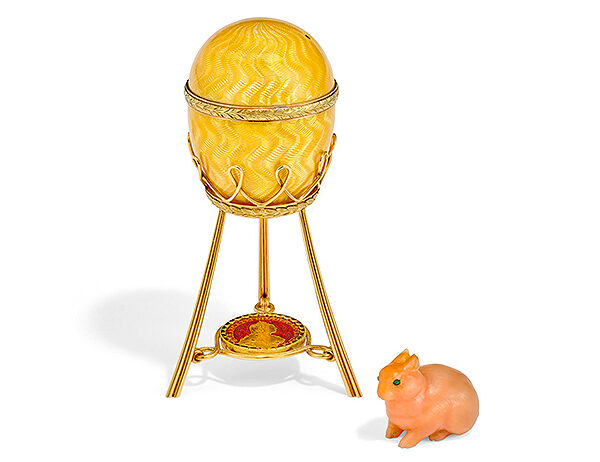
A small yellow guilloché enamel, gold-mounted, Bonbonnière by Perkhin (1899-1903), in the form of an egg on a (later) gold tripod stand, scorched to £304,800 ($402,000) – ten times low-estimate. A very noticeable chip to the enamel (guilloché enamel is impossible to restore to perfection) was no deterrent to the person from Florida who bought it on-line for £240,000 hammer after a vociferous saleroom battle. Had the buyer (and underbidder) examined the piece before deciding to go for it? They must have been a couple of very keen egg-lovers – three hundred grand for a damaged egg is a bit of a yoke if you ask me. The egg contains an agate model of a rabbit with olivine eyes, set on a (later) panel notched to resemble grass. The cute item was once in the Forbes Collection, which doubtless enhanced its appeal (Lot 42, est. £30-50,000).
-
- Lot 4, Jewelled and Gold‑Mounted Hardstone Model of a Cockerel

-
- Lot 48, Design Album from the Workshop of Henrik Wigström
The wonderful Wigström Cockerel (or Rooster) from 1911 sold for £254,000 ($335,000) . This 8.2cm piece of poultry perfection – another masterpiece once owned by Emanuel Nobel – has labradorite wings and purpurine comb and wattles. This swaggering symbol of Gallic Supremacy is also illustrated in Ulla Tillander’s Golden Years of Fabergé (Lot 4, est. £50-70,000).
 Lot 6, Jewelled Kalgan Jasper Model of an Elephant
A Kalgan jasper Elephant (c.1900) with rose-cut diamond eyes fetched £127,000 ($168,000). The capering critter came with its original fitted Fabergé case. First line under Provenance – presumably based on the catalogue of the Elephant’s first saleroom outing at Sotheby’s Zurich in 1976 – was the name Princess Galitzine. Christie’s speculated that the princess in question was the half-Georgian Ирен Голицына (Irene Galitsyn) born in Tbilisi in 1916, later famous as an Italian fashion designer. She lived until 2006, so the Elephant can’t have reached auction as part of her estate (Lot 6, est. £30-50,000).
-
- Lot 1, Imperial Gem‑Set and Guilloché Enamel Two‑Colour Gold‑Mounted Bell‑Push

-
- Dowager Empress Maria Feodorovna
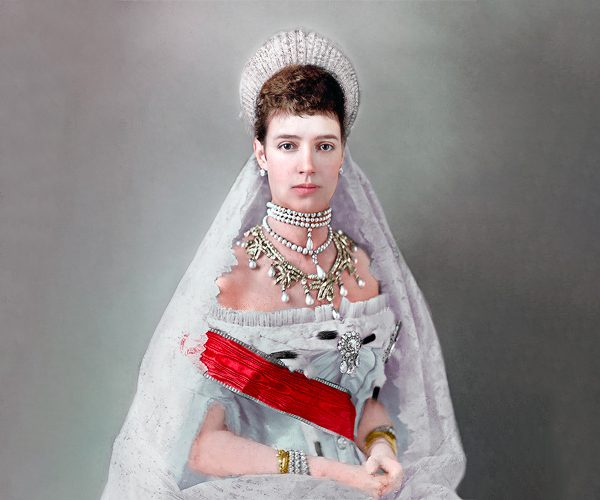
An unexpected £177,800 ($235,000) was lavished on a mauve enamel bell-push by Perkhin. Although the piece falls into the category of wonderful bell-pushes, I can only imagine the astronomic price was due to its being purchased by Dowager Empress Maria Feodorovna in 1899 (Lot 1, est. £20-30,000).

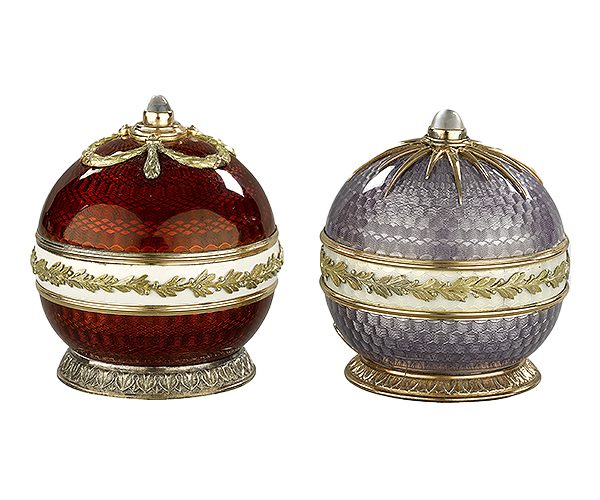

Bell-pushes from Ruzhnikov Collection
I have a couple of Wigström bell-pushes on my website: a silver, blue enamel and seed pearl bell-push with its original fitted case; and a rococo gold and pink enamel bell-push in a Wartski fitted case. The latter features in my book Fabergé Works of Art – The Desk Objects alongside two other gorgeous, rare spherical bell-pushes by Perkhin, one from the collection of King George of Greece. All four are comparable in quality to the bell-push sold at Christie’s.
 Lot 12, Imperial Guilloché Enamel Gold‑Mounted Nephrite Writing Set
It was a question of same provenance, same price for a nephrite writing-set from 1906 that fetched £177,800 ($235,000) against an estimate of £30-50,000. It’s an interesting gizmo but more of a museum-piece, reflecting the scope of Fabergé’s output, than something you can put on your sideboard to gaze at lovingly (Lot 12).
 Lot 30, Silver and Enamel Button Hook
Another crazy purchase was a twee guilloché enamel ‘button hook’ made by workmaster Erik Kollin circa 1890 that some sartorial eccentric, who must have been emotionally attached to the thing, thought worth £50,800 ($67,000). No retailer would ever entertain such a price. What’s so special about it? Why would anybody pay that sort of money? It’s typical of what happens when folks in an auction room get carried away. Auction fever prevailed in this case (Lot 30, est. £5-7,000).
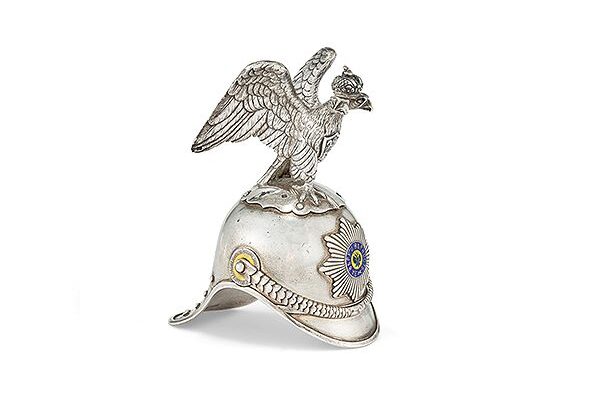 Lot 45, Silver and Enamel Charka in the Form of a Chevalier Guard Helmet
I was less surprised to see a wonderful silver and enamel Charka (1899-1904) by Julius Rappoport, shaped like a helmet topped by a double-headed eagle, zip to £38,100 ($50,300). This was an item of historical importance, so I had a good look at it ahead of the sale… and was disappointed to find a gaping hole drilled in the back which, given the finish to the helmet, I suspect is impossible to fill in (Lot 45, est. £8-12,000).
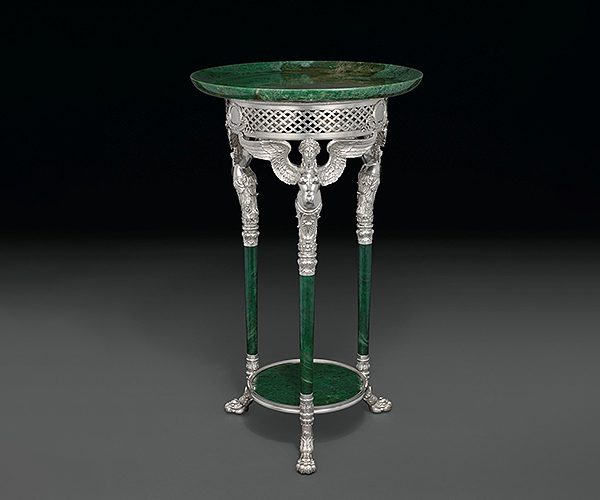
Lot 23, Silver‑Mounted Nephrite Gueridon Table
The only unsold item of any importance was a dainty, Empire-style nephrite guéridon table by Hjalmar Armfelt, just over 3ft high (c.1915). I saw this when it last appeared at auction in 2014, making $776,000 (£540,000) at Christie’s New York. It’s a wonderful piece of work: rare and important. It was expected to bring £500-700,000 this time round… hardly an improvement on what it fetched a decade ago, so its failure was all the more disappointing. Go find another piece of Fabergé furniture so lavishly embellished with silver! – I don’t remember seeing any. Only a handful of items of Fabergé furniture are known, and the majority are in museums (Lot 23).
Do you have any comments about this article?
If so please e-mail me at ruzhnikov@russianarts.com
* all prices include premium unless otherwise indicated