Auction catalogues often resort to weird verbiage that seems designed to confuse potential buyers rather than enlighten them. Fabergé items are among the worst affected – with descriptions containing phrases like in the style of Fabergé, attributed to Fabergé or apparently unmarked.
‘Attributed to Fabergé’ – does that mean the auctioneers aren’t sure?
‘Apparently unmarked’ – how stupid is that? Why doesn’t the auction-house expert put his or her spectacles on, and/or pick up a magnifying glass, and have a good look? Is the thing marked or not? If it’s not marked, how do we know it’s by Fabergé?
Then there’s marked Fabergé. Means nothing. Is it by Fabergé or not? What does the auction house guarantee? Phony Fabergé marks are very difficult to dispute in a court of law. You can find hundreds of items marked Fabergé on eBay that are just modern reproductions.
If a piece is unquestionably by Fabergé, then the catalogue should say exactly that: why write marked Fabergé? What’s the difference?
This sort of verbal confusion is nothing new. I was thumbing through an old Christie’s catalogue the other day and came across a number of examples that illustrate my point.

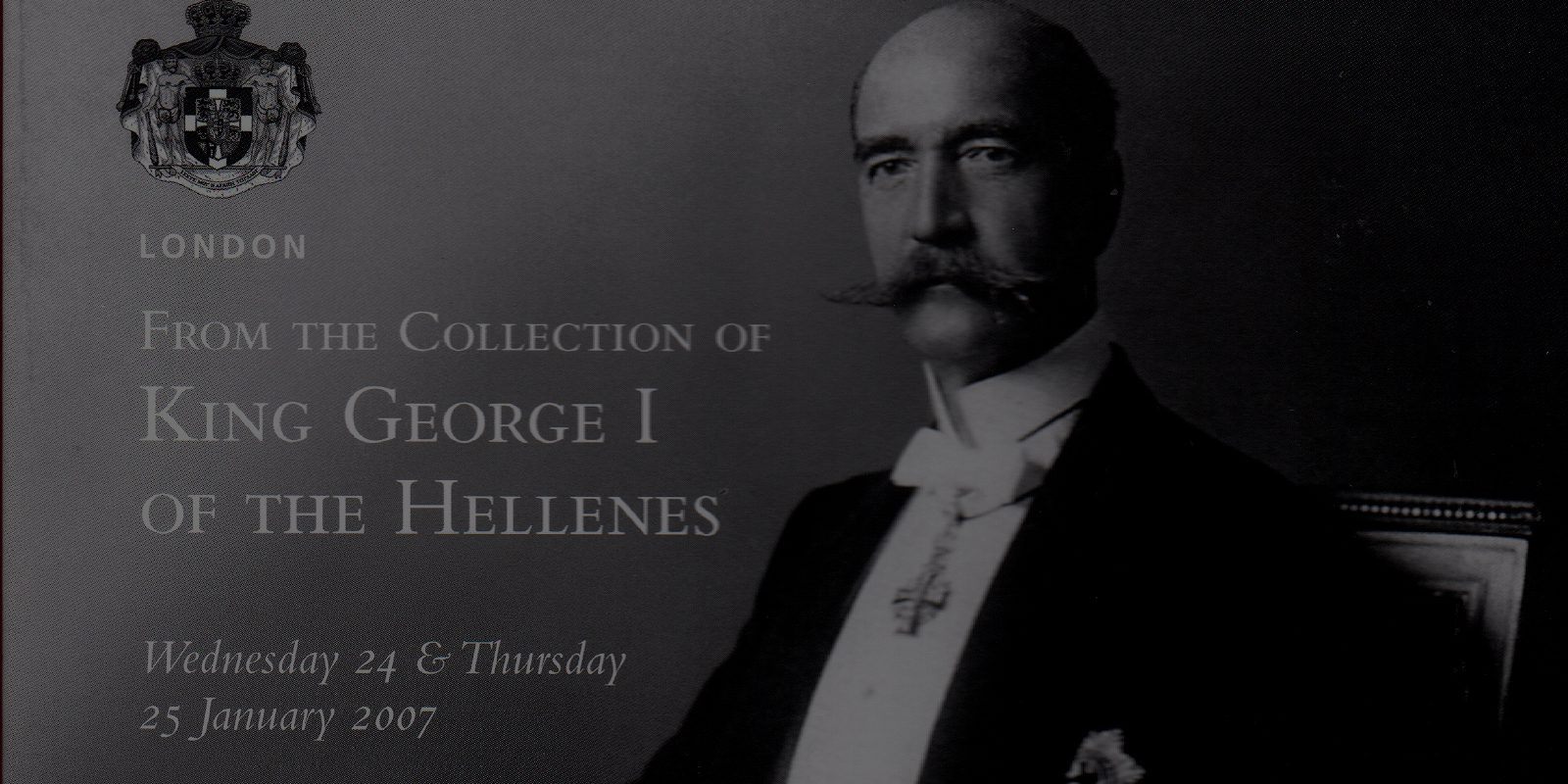
The sale concerned took place in London in January 2007, and was devoted to the Collection of King George I of the Hellenes: a good-looking provenance. It included 14 lots apparently by Fabergé.
Six of these lots were catalogued as featuring the workmaster’s mark of Mikhail Perkhin. That sounded clear enough.
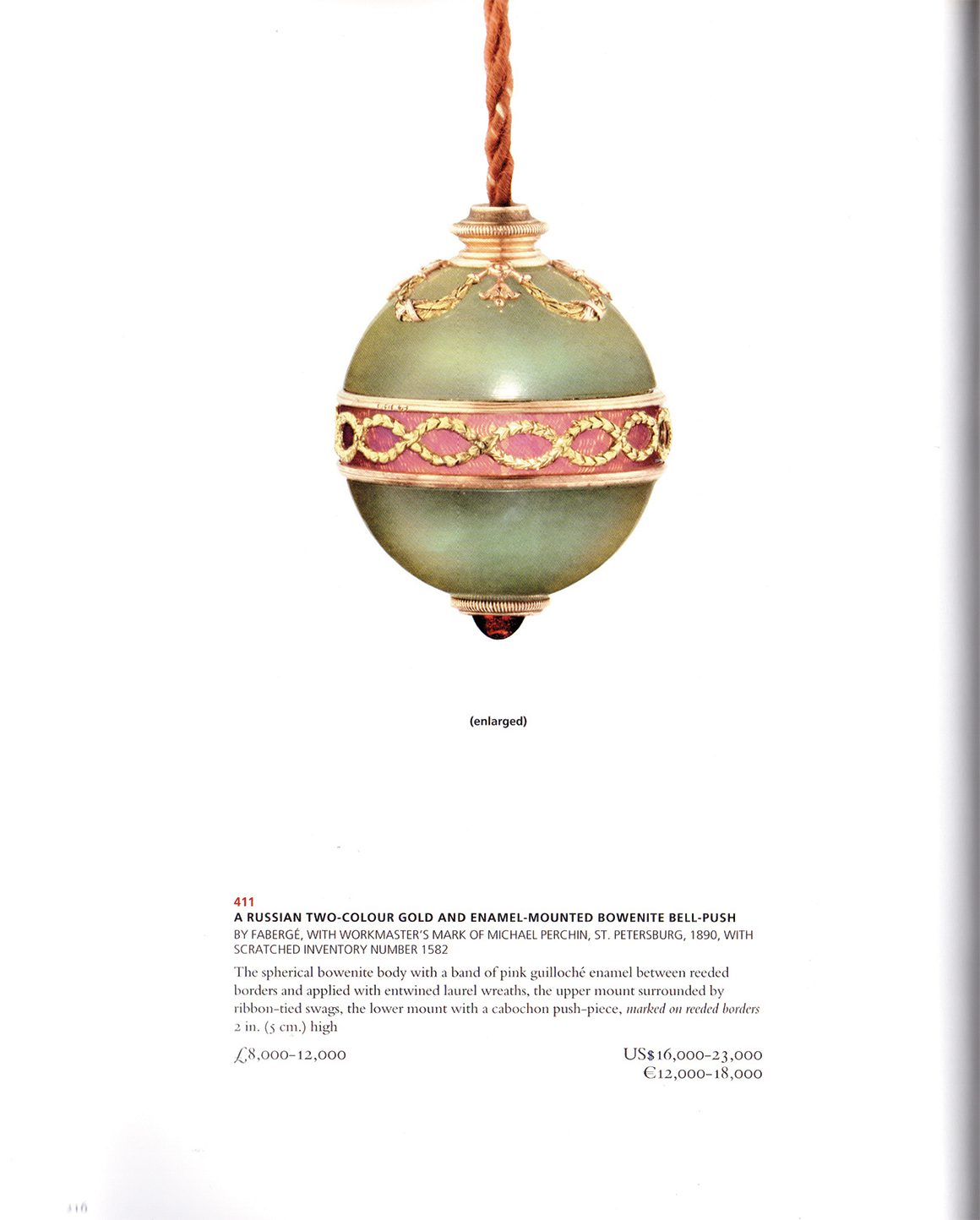


Three of these Perkhin items – a bowenite bell-push and two pink-enamelled cane-handles – were catalogued as by Fabergé (Lots 411, 417, 420). But the three other lots – a mauve enamel bell-push, bowenite box and green beryl hand-seal – were catalogued as marked Fabergé (Lots 400, 412, 419).
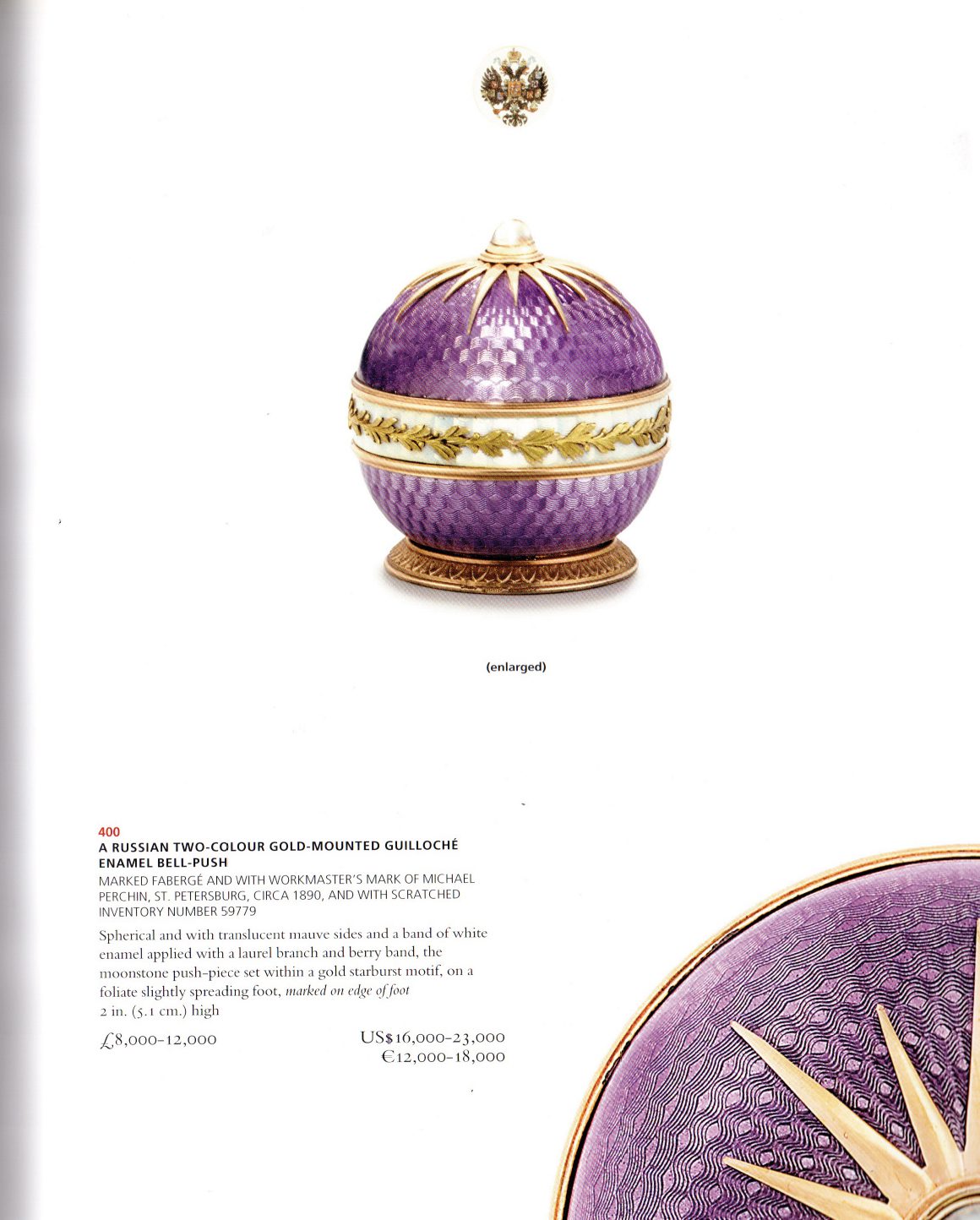
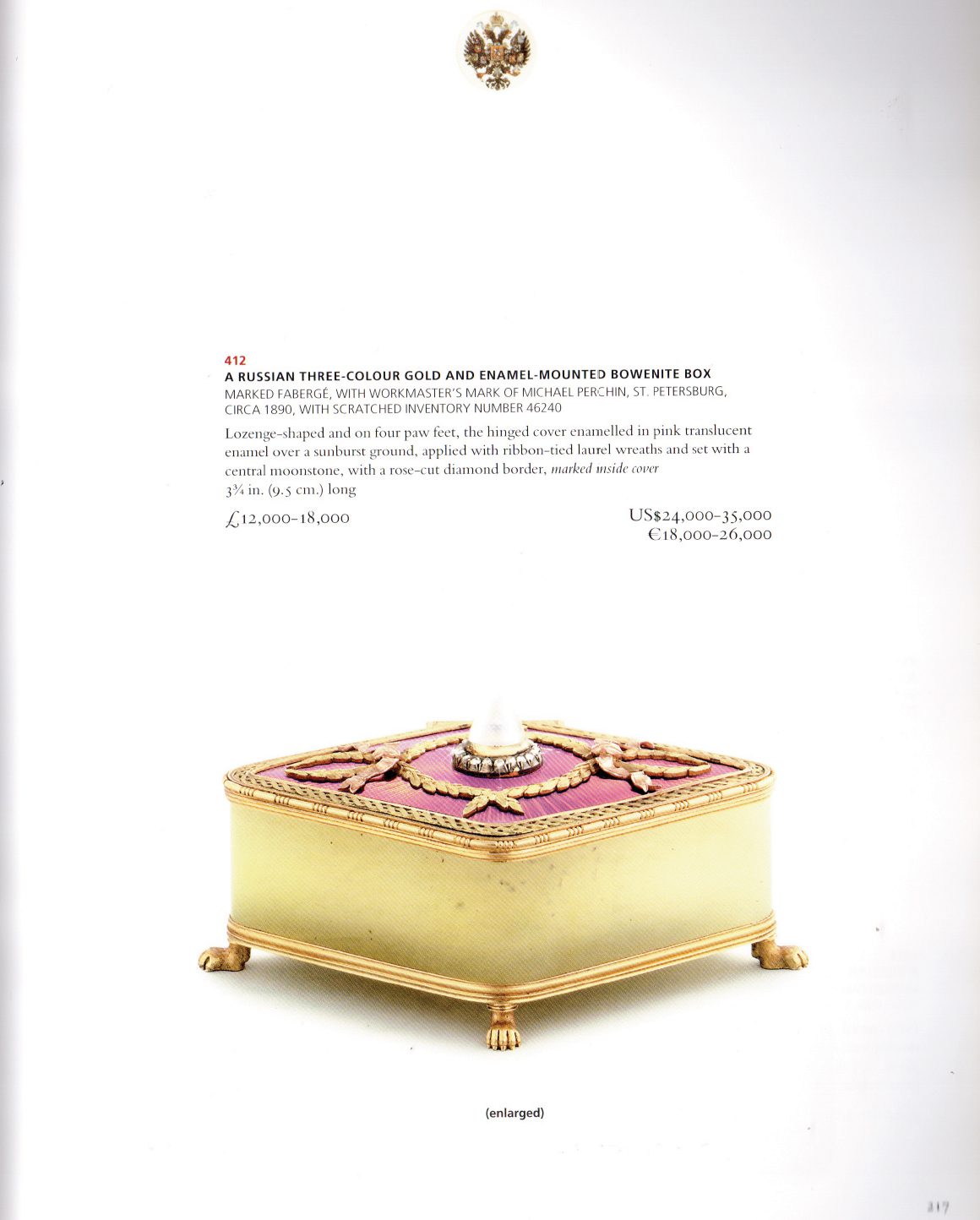
Why the hell were Christie’s differentiating these six items – all purportedly bearing the same hallmark ! – into by Fabergé and marked Fabergé?
Was it just sloppy, inconsistent cataloguing?
Or was it some sort of secret auctioneer’s code indicating that three items were unquestionably bona fide Fabergé, whereas the other three had something a bit dodgy about them?
A nephrite desk-calendar and pair of nephrite candlesticks were all marked Fabergé (not by Fabergé), with the workmaster’s mark of Julius Rappoport (Lots 401 & 402). Yet a rock crystal scent-bottle with unknown workmaster’s mark AR was unequivocably by Fabergé (Lot 399).


Talk about confusing! (AR, incidentally, was Anna Ringe, not Andre Ruzhnikov – Christie’s should have made that clear, but had presumably never heard of her).
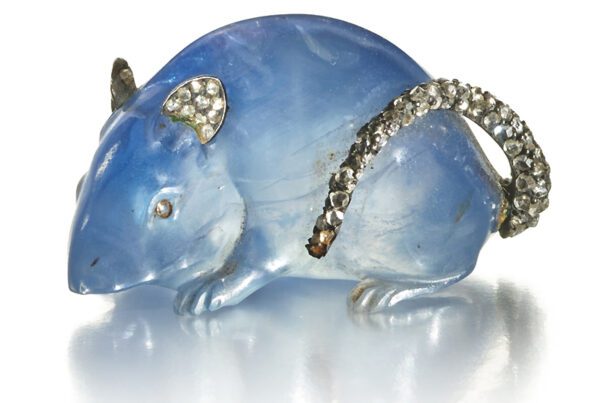
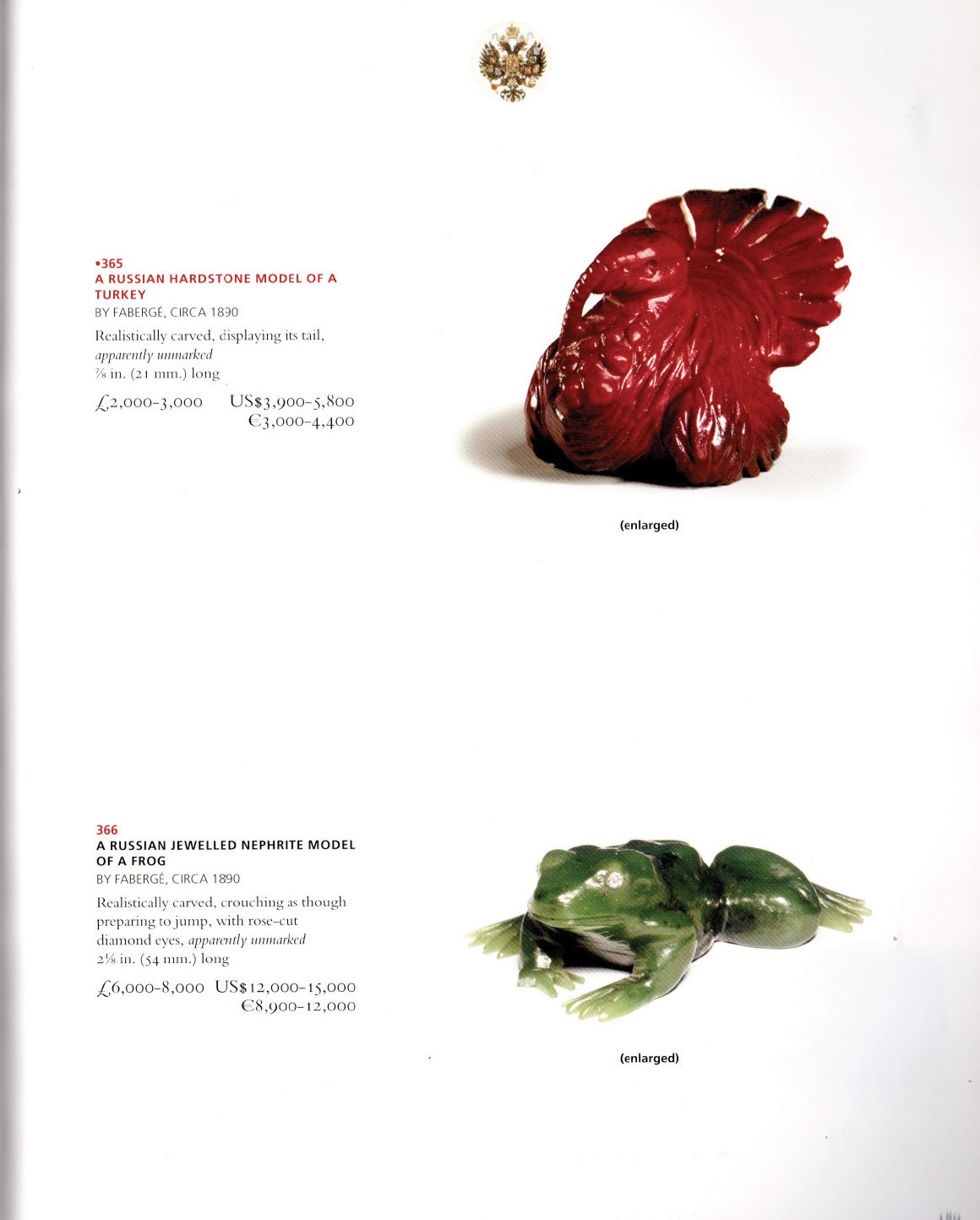
The sale’s four hardstone creatures – green hardstone mouse, labradorite frog, hardstone turkey and nephrite frog (Lots 363-366) – were all catalogued merely as by Fabergé, i.e. were all unmarked. This is usually the case with small Fabergé animals that don’t have a flat surface large enough to appose a hallmark. So how do we know if such pieces are kosher?
Answer: we don’t – unless they come with their original Fabergé fitted case.
There was no mention of any of the four lots here having any case at all.